Four-month-old Baby on a Horseback: Is It Too Early?
When people hear that I work with babies in Equine-Assisted Physiotherapy — sometimes from as early as three months — the reaction is almost always the same:
Is it safe? Isn’t it too early? What do you even do with such a small child?
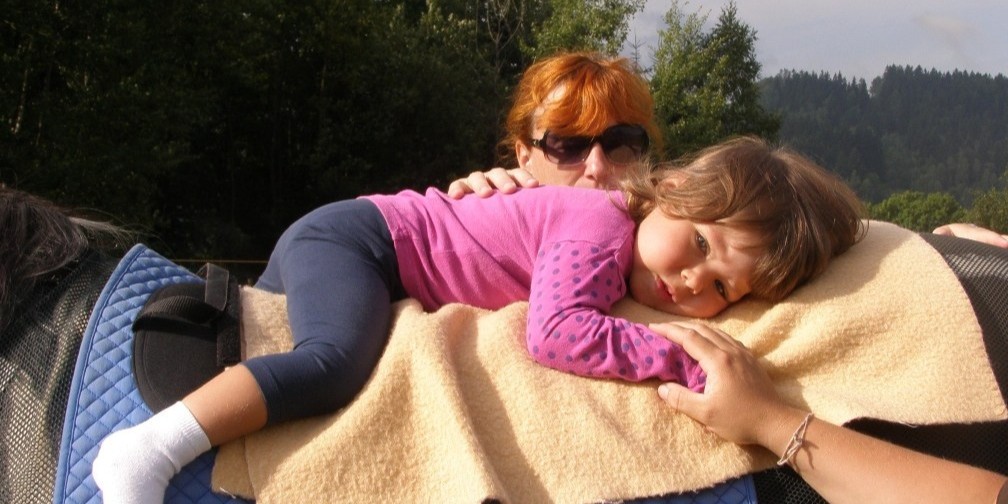
These are very natural questions. In many countries, there is still a common belief that Equine Assisted Therapy should begin much later, often around two to three years of age. Yet in clinical practice, particularly in early intervention, waiting is not always the most supportive option.
The first years of life are not “too early” to be on horseback. They are, in fact, the most important.
During early development, the brain is exceptionally open to change. This ability — known as neuroplasticity — means that the central nervous system is continuously organising itself in response to the experiences it receives. Movement, touch, balance, repetition, and interaction are not simply activities; they are the foundation of how the brain learns to function. When a developmental difficulty is present, this window becomes even more significant — and there is no reason to wait.
The brain does not change because we hope it will. It changes through meaningful, repeated sensory–motor input. And in early childhood, this process is at its peak.
This is where the equine becomes relevant.
The movement of the equine at walk provides rhythmic, repetitive, three-dimensional input to the child’s body. It gently influences the pelvis, trunk, and postural system in a way that is very difficult to replicate artificially. For a baby who is not yet lifting their head, not yet crawling, and perhaps struggling with muscle tone or coordination, this input can be highly meaningful.
The first years of life are not “too early” to be on horseback. They are, in fact, the most important.
But this is not about “riding”.
And it is certainly not about placing a child on an equine and hoping for the best.
The work is precise, structured, and guided by clinical reasoning. We do not expect a child to sit independently, nor do we force positions that are not developmentally appropriate. Instead, we return to the very beginning of movement development, applying therapy positions on horseback that correspond to developmental milestones.
In other words, we meet the children exactly where they are.
Another common concern is safety — and here it is important to be very clear.
Working with babies in Equine-Assisted Physiotherapy is only appropriate within a highly controlled environment: a carefully selected and prepared equine, an experienced and qualified team, and continuous risk assessment. Safety is not an additional layer; it is the foundation of the entire process.
When these conditions are in place, the environment becomes not only safe but also deeply regulating and motivating. Many babies show improved calmness, better engagement, and more organised movement patterns. Often, the change is not dramatic in the moment — but appears later, once the central nervous system has had time to process and integrate the experience.
And this is perhaps one of the most important points.
Early does not mean rushing.
Early means respecting the moment when the brain is most ready to learn.
In my experience, compared to traditional clinic-based physiotherapy, the difference is often evident not only in movement but also in the overall atmosphere: greater motivation, visible joy, willingness to participate, more relaxed caregivers, and, very often, faster progress towards therapy goals with less stress.
For parents, this can open a new perspective. For professionals, it may raise new questions — and perhaps a healthy curiosity.
If this topic resonates with you, whether as a parent or a practitioner, you may wish to explore it further, observe it in practice, or simply ask questions.
For families who would like to explore this approach more closely, we occasionally offer small programmes that bring therapy and family time together in a calm, supportive setting.
One of these will take place this year in Crete, where children can experience Equine Assisted Therapy in a beautiful environment while families have the space to observe, connect, and spend time together.
If this feels relevant to you, you can read more here.
Věra’s EAS Lens is a space where I share my professional reflections, clinical reasoning, and international experience in Equine Assisted Therapy and Services. Drawing on many years of practice, education, and collaboration across countries and disciplines, I look at EAS through an expert, critical, and ethical lens. This blog is written for professionals, students, and organisations who wish to understand EAS beyond trends and enthusiasm, and to anchor their work in quality, responsibility, and meaningful practice.
If you are curious to learn more about Equine Assisted Services and how they are understood and practised today, you can explore further information here:
https://hipoterapie-kurzy.com/eas/

Enjoyed this article? Download our free e‑book “10 Essential Insights into Equine Assisted Services” and discover practical tips you can start using today.
Would you like more inspiration, ideas, and professional insights? Join our Svítání newsletter and never miss an article, event, or course update.
Curious to deepen your knowledge in Equine Assisted Services? Explore our courses designed by experienced practitioners and start your learning journey with Svítání today.
 Intensive Equine Assisted Therapy Clinics: Why a Few Days Can Make a Real Difference
Why can intensive Equine Assisted Therapy achieve strong results in a few…
 Why I Do Not Use Helmets in My Equine Assisted Physiotherapy Sessions
Are helmets always necessary in Equine Assisted Physiotherapy? A clinical perspective on…
 Why Physiotherapists Sometimes Need an Equine
Why can equine movement support physiotherapy? A reflection on how Equine Assisted…