Balancing Evidence, Experience and Ethics in EAS Practice
In conversations about Equine Assisted Services, three words often appear: evidence, experience, and ethics. Each carries weight and represents an important perspective on professional practice. Yet in everyday work, the challenge is not choosing among them, but learning to balance all three.

Evidence is increasingly important in Equine Assisted Services. Research helps us understand how equine movement influences the human body, how regulation and sensory processing may be affected in equine environments, and what outcomes have been observed across different contexts. Evidence supports credibility and helps the field communicate with healthcare, education, and research communities. At the same time, research in this area is still developing, and it cannot answer every practical question a practitioner encounters.
This is where experience comes into play. Over time, practitioners develop a deeper sensitivity to subtle changes in posture, engagement, regulation, and interaction. Experience helps recognise patterns that are not always described in textbooks or research articles. However, experience alone is not enough. Without reflection and openness to new knowledge, experience can also lead to routines that are never questioned.
In real practice, evidence informs understanding, experience guides decisions, and ethics define the boundaries of responsible work.
Ethics form the third pillar. In Equine Assisted Services, ethical responsibility extends to everyone involved — the client, the equine, and the wider team supporting the service. Decisions about workload, expectations, boundaries, and communication must consider the well-being of both the equine and the people who make the work possible.
In real practice, these three elements constantly interact. Evidence informs understanding, experience guides moment-to-moment decisions, and ethics provide the framework within which those decisions are made. Sometimes they align easily, but at other times they create tension. A practitioner may rely on experience while recognising that research remains limited, or may follow emerging evidence while remaining attentive to the client’s and the equine’s individual needs.
Balancing evidence, experience, and ethics, therefore, requires humility. It asks practitioners to remain curious, reflective, and willing to adjust their thinking as the field evolves. Rather than searching for a single correct formula, Equine Assisted Services benefit from professionals who can hold these perspectives together and allow them to inform thoughtful, responsible practice.
Věra’s EAS Lens is a space where I share my professional reflections, clinical reasoning, and international experience in Equine Assisted Therapy and Services. Drawing on many years of practice, education, and collaboration across countries and disciplines, I look at EAS through an expert, critical, and ethical lens. This blog is written for professionals, students, and organisations who wish to understand EAS beyond trends and enthusiasm, and to anchor their work in quality, responsibility, and meaningful practice.
Follow my blog on FB, Ins and LinkedIn #VeraEASLens

Enjoyed this article? Download our free e‑book “10 Essential Insights into Equine Assisted Services” and discover practical tips you can start using today.
Would you like more inspiration, ideas, and professional insights? Join our Svítání newsletter and never miss an article, event, or course update.
Curious to deepen your knowledge in Equine Assisted Services? Explore our courses designed by experienced practitioners and start your learning journey with Svítání today.
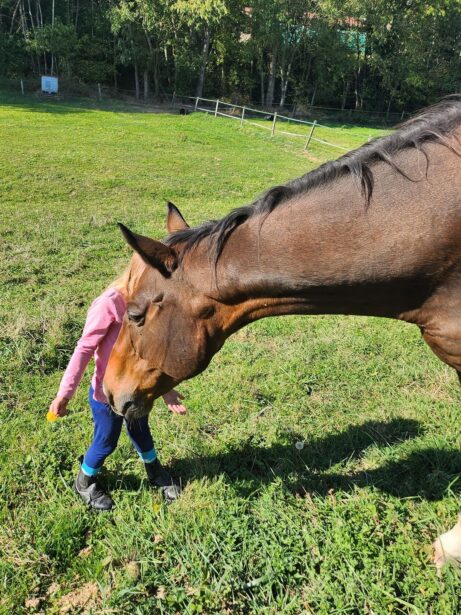 The Silent Load: Why Therapy Equines Shouldn’t Be Called Therapists
In modern discourse, it’s all too easy to conflate our Equine Assisted…
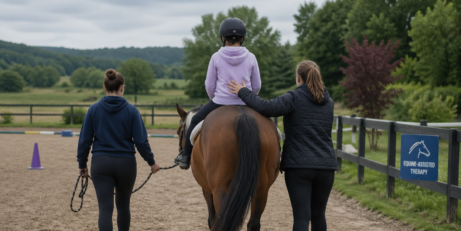 Enthusiastic but not yet qualified
Can enthusiasm replace training in Equine Assisted Therapy? A professional reflection on…
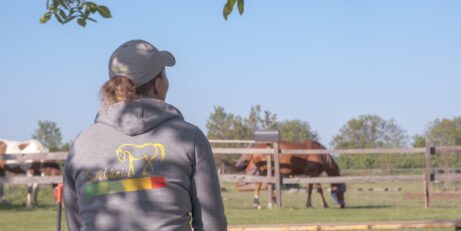 What I Wish I Had Known Before Working in Equine Assisted Services
What should you know before working in Equine Assisted Services? Vera Lantelme-Faisan…