Enthusiastic but not yet qualified
In Equine Assisted Services, I often meet people who are kind, generous, and genuinely motivated to help. They love equines, care about others, and want to create something meaningful. This enthusiasm is valuable and should never be dismissed.
In many places, it is exactly this spirit that helped services begin. Some centres were built through dedication, volunteer energy, and people stepping forward when there was little support available. Communities benefited because someone cared enough to start. That deserves recognition.
At the same time, as our field grows, another conversation becomes important.
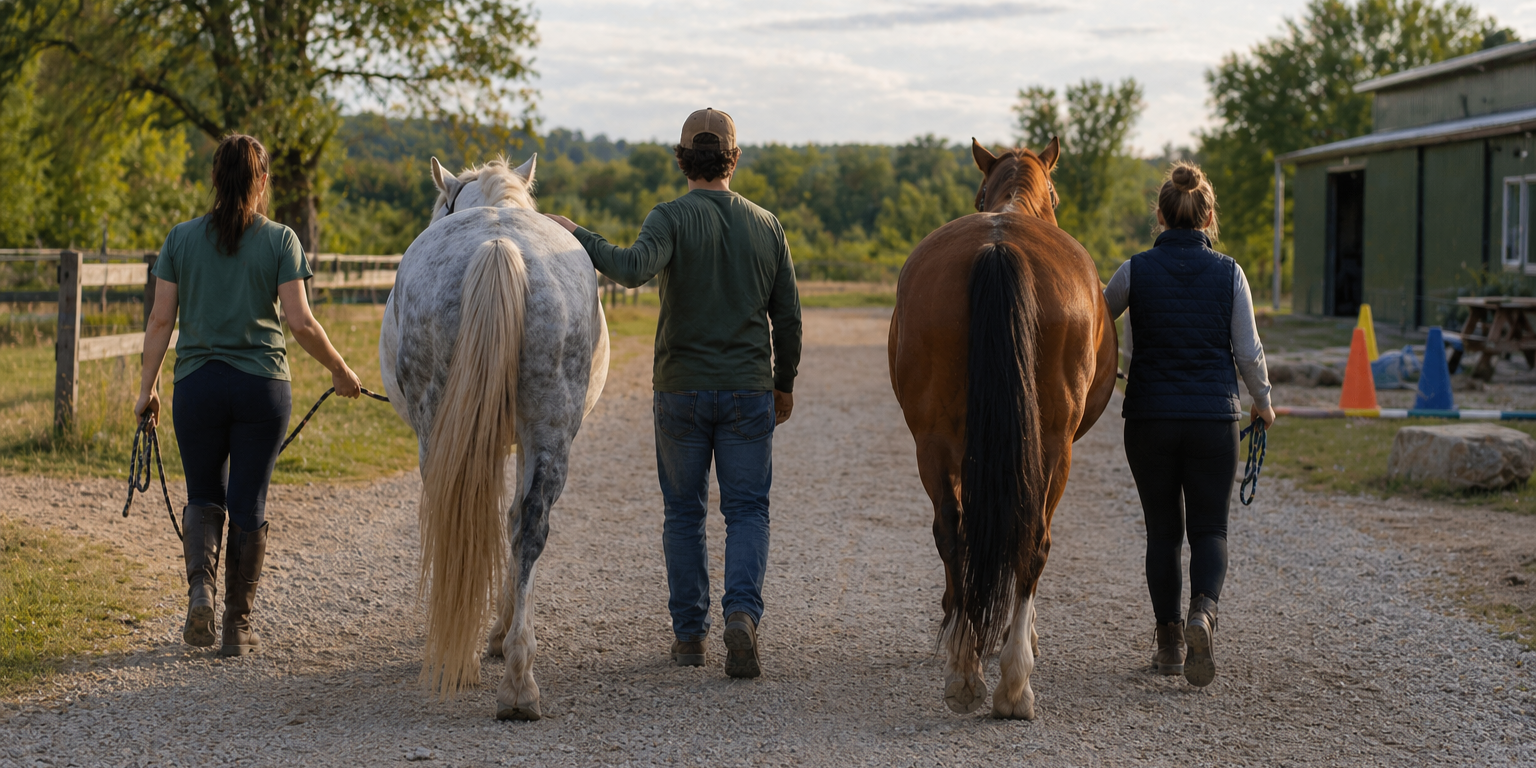
Good intentions and enthusiasm are valuable foundations, but they are not the same as qualifications.
Today, we understand far more about safety, safeguarding, equines, professional boundaries, risk management, the effects of Equine Assisted Services on clients, and the appropriate indications and contraindications for practice than we did years ago. As knowledge grows, responsibility grows with it.
Many people begin by helping in practical ways. They assist around the yard, support sessions, encourage clients, or offer their calm and trusted equine for activities. Over time, because they are committed and appreciated, their responsibilities may gradually increase. Sometimes, without anyone clearly noticing, they move into roles that require training they have never received.
Good intentions and enthusiasm are valuable foundations, but they are not the same as qualifications.
This is not always the fault of the individual.
Responsibility also belongs to centres, organisations, and providers. When budgets are tight, qualified staff are difficult to find, or demand is growing, it can be tempting to rely on goodwill instead of competence. Volunteers may be asked to do more. Boundaries may become blurred. Standards may slowly lower without anyone intending that to happen.
But need does not automatically create competence. And kindness does not automatically prevent harm.
In Equine Assisted Services, we often work with people who may be physically vulnerable, emotionally sensitive, neurologically complex, or unable to communicate discomfort clearly. Small mistakes can have bigger consequences than we realise. Sometimes harm is visible. Sometimes it is subtle and accumulates over time.
A caring person may still miss important warning signs.
A trusted helper may still use poor handling techniques.
A well-meaning equine owner may still work beyond their competence.
A centre with warm values may still operate below safe standards.
Equines are affected too. Poor judgment, unclear handling, unrealistic expectations, or inconsistent training can influence their well-being and, in turn, the safety of everyone involved.
This is why enthusiasm needs guidance.
For independent providers working on their own property, it can be especially challenging. Without colleagues, supervision, or external feedback, it is easy to assume that what feels right must be right. For volunteers within organisations, it can be difficult to say no when help is needed.
This is where reflection becomes essential: “Where does my competence begin? Where does it end? Which parts of the work am I truly prepared for? At what point should another professional take over? Am I genuinely helping, or could I unintentionally be causing harm?” These are professional questions that we should all ask ourselves regularly.
The positive news is that enthusiasm can be the beginning of a professional journey. Many passionate people become excellent professionals when they choose to continue learning, seek supervision, and understand their limits.
Education does not diminish kindness. Qualification does not replace heart. Good training gives passion a safer and more effective direction.
Sometimes, the most professional sentence a person can say is: “I would love to help, but this part is beyond my competence.” That is not a weakness. That is maturity.
My hope for our field is that people choose to grow through learning, clearer boundaries, stronger standards, and teamwork. Because if we want Equine Assisted Services to be acknowledged, effective, safe, and sustainable, we need competence to match the passion.
Want to build a stronger foundation before working in Equine Assisted Services?
Core Principles of Equine Assisted Services is a 74-hour online foundation programme designed to help you understand professional roles, safety, equine welfare, terminology and the knowledge you need for your next step.
Věra’s EAS Lens is a space where I share my professional reflections, clinical reasoning, and international experience in Equine Assisted Therapy and Services. Drawing on many years of practice, education, and collaboration across countries and disciplines, I look at EAS through an expert, critical, and ethical lens. This blog is written for professionals, students, and organisations who wish to understand EAS beyond trends and enthusiasm, and to anchor their work in quality, responsibility, and meaningful practice.
Follow my blog on FB, Ins and LinkedIn #VeraEASLens

Enjoyed this article? Download our free e‑book “10 Essential Insights into Equine Assisted Services” and discover practical tips you can start using today.
Would you like more inspiration, ideas, and professional insights? Join our Svítání newsletter and never miss an article, event, or course update.
Curious to deepen your knowledge in Equine Assisted Services? Explore our courses designed by experienced practitioners and start your learning journey with Svítání today.
 What Can You Actually Do When Equine Assisted Services Barely Exist in Your Country?
Equine Assisted Services barely exist in your country? Learn how to begin…
 Do I Need My Own Centre to Work in Equine Assisted Services?
Do I Need My Own Centre to Work in Equine Assisted Services?
 Do I Need Horse Experience to Work in Equine Assisted Services?
Do you need horse experience to work in Equine Assisted Services? Learn…