Positioning on the Equine: Small Details That Change Everything
In Equine Assisted Services, when I discuss practice with my students or visit centres, I see a strong focus on what we do with the client — the activity, the goal, the task, the interaction. But there is something that comes before all of that.
Client posture.
Posture is not accidental. It is the result of positioning, appropriate equipment, and the quality of the equine’s movement. I always focus first on the client’s posture. Positioning is my tool.
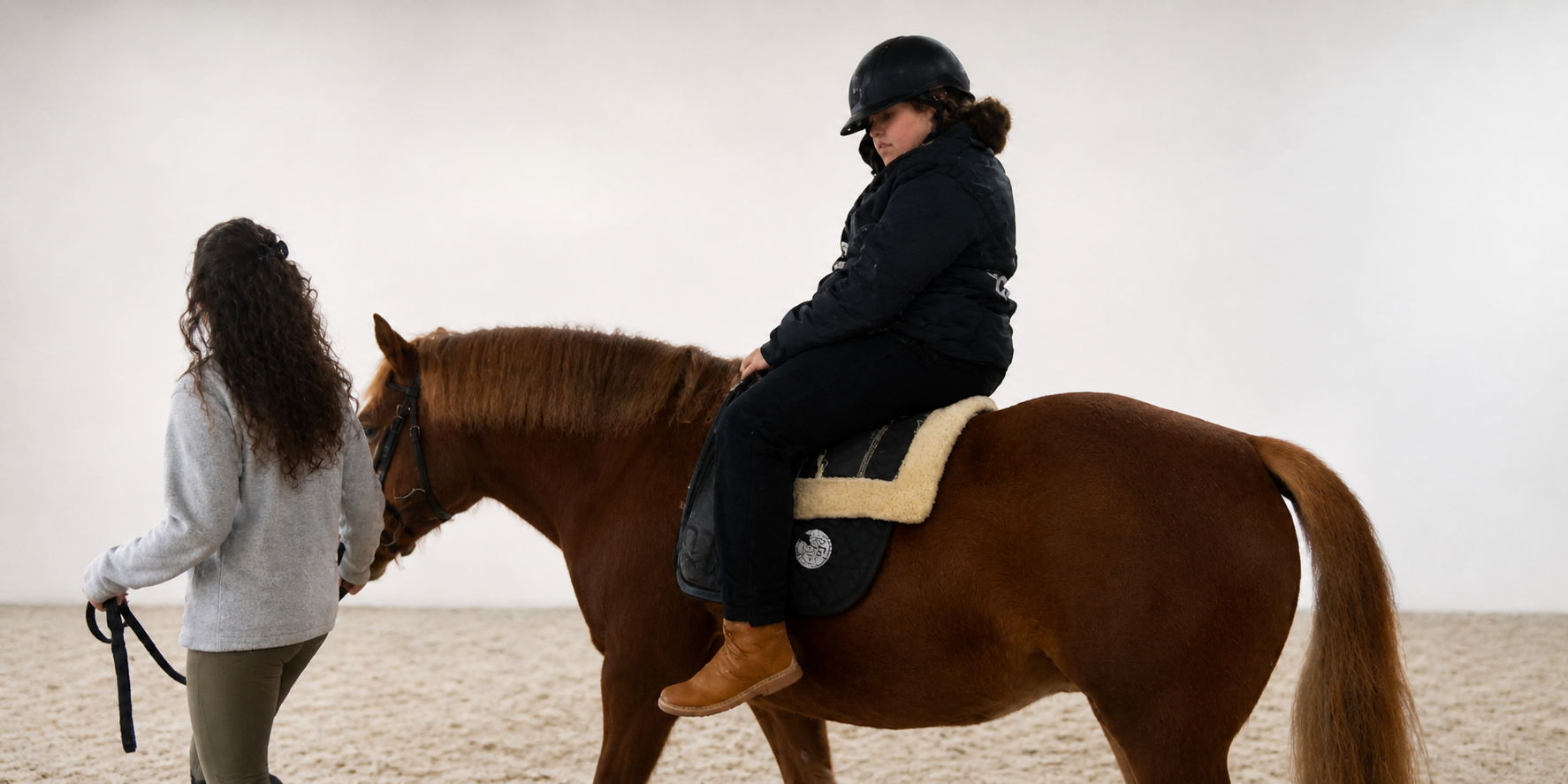
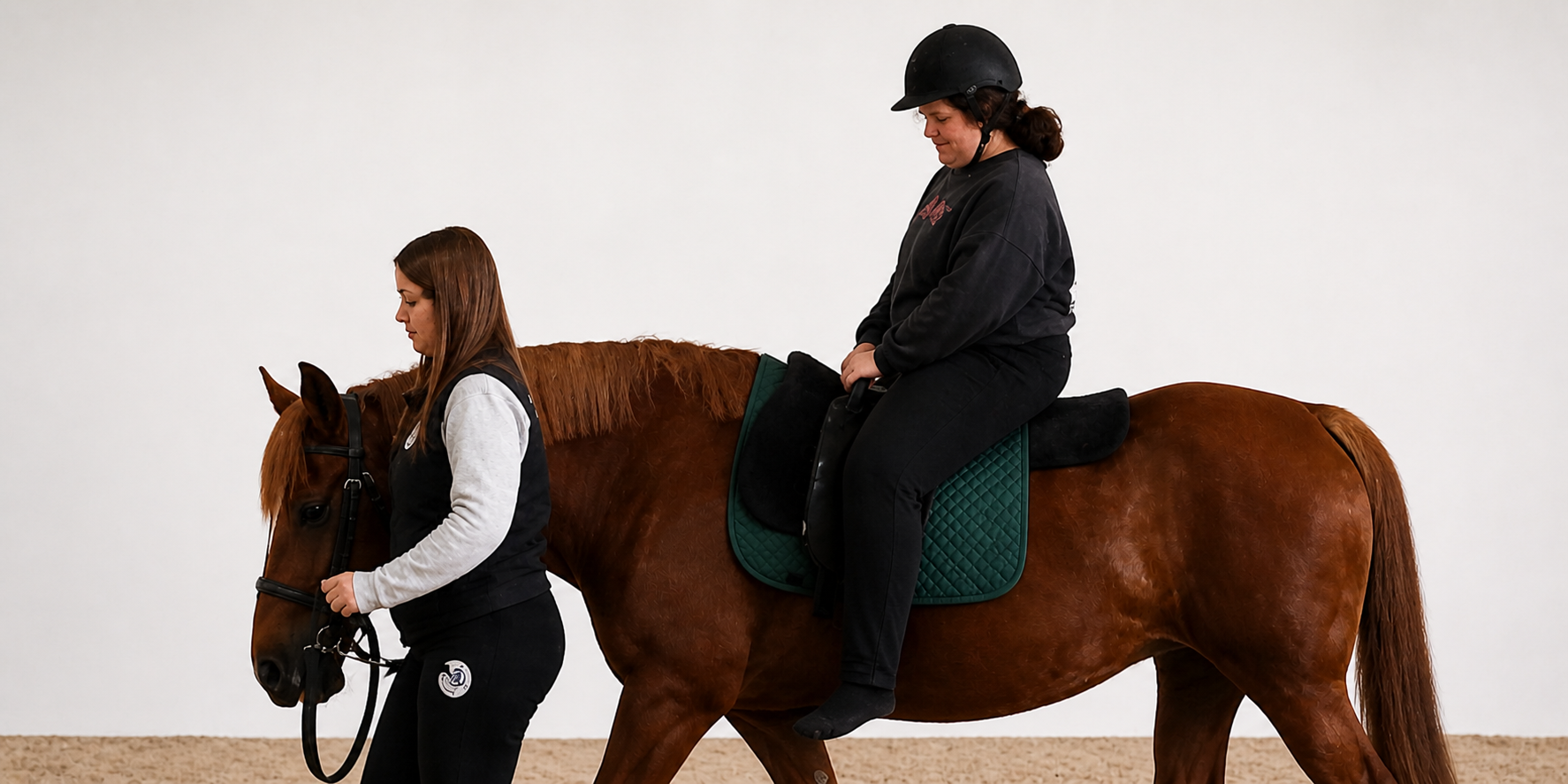
As a physiotherapist, I was trained to think posture first, then movement. Without a correct, engaged posture, meaningful activity cannot occur, no matter what we try. The body will always compensate, compromising the quality of movement.
If the client is on the equine, correct and engaged posture matters. Without it, we are not using the full potential of the work. This applies across all professions in the field — whether you are a physiotherapist, occupational therapist, speech and language therapist, psychomotor therapist, psychologist, educator, or instructor. If the client is mounted, posture is the foundation.
This is also why physiotherapy plays a fundamental role in Equine Assisted Services. It creates the base on which all other approaches can build. If the body is not organised, it is very difficult to achieve meaningful outcomes in communication, learning, behaviour, or interaction.
If posture is not right, the therapy is not fully happening.
If you are running a centre and do not have a physiotherapist on your team, consider inviting one, even externally. Let them assess the client, discuss positioning and equipment, and observe the session. You may be surprised how quickly things can change. Sometimes, a small repositioning of the client by just a few centimetres or a simple adjustment of the equipment can create an immediate and visible difference.
The equine offers a powerful, rhythmic, repetitive, three-dimensional movement. But this movement only becomes meaningful when the client’s body is able to receive it. And that begins with the pelvis.
If the pelvis is not well positioned — if it is rotated, shifted, reclined, or unstable — the trunk cannot respond effectively. Without appropriate core muscle activity, there is no real stability. And without stability, the body cannot respond to movement in a functional way.
We often speak about activating the core, cross-pattern movement, and coordination. But these do not come from activities alone. They come from posture.
If the client is positioned so that the pelvis is aligned and centred over the equine’s centre of gravity, the input can travel through the body. The trunk begins to respond, the system becomes more organised, and the client is no longer just sitting — they are engaged.
If not, we may still run the session, we may still see participation, and we may feel that something is happening — but we are often using only a small part of what the equine can offer.
This is where positioning becomes precise.
It is not about placing the client and leaving them there. It is about continuously observing and adjusting. A small change in pelvic alignment, a shift in support, or a different contact can completely change how the movement is received.
Equipment plays an important role here. What is meant to support positioning can easily interfere with it. Too many layers of pads or unsuitable handles can distance the client from the ideal position. Instead of supporting posture, they reduce the quality of input. The aim is to use only what truly supports posture and engagement.
When posture is correctly engaged, something else happens. The central nervous system receives clearer, more consistent input. The client often becomes calmer, more confident, more focused, and more available for further interaction. Regulation improves.
This is not because we asked for it. It is because the body is better organised and able to respond more efficiently.
Only then does it make sense to add activities — whether physical, communicative, cognitive, or educational. Without correct posture, these activities may appear successful, but their effect is limited.
This is why it is sometimes important to pause.
Before we ask the client to do more, we should first look:
Is the posture engaged?
Is the pelvis aligned?
Is the trunk responding?
If not, we adjust the positioning. And only then do we continue.
Věra’s EAS Lens is a space where I share my professional reflections, clinical reasoning, and international experience in Equine Assisted Therapy and Services. Drawing on many years of practice, education, and collaboration across countries and disciplines, I look at EAS through an expert, critical, and ethical lens. This blog is written for professionals, students, and organisations who wish to understand EAS beyond trends and enthusiasm, and to anchor their work in quality, responsibility, and meaningful practice.
If you are curious to learn more about Equine Assisted Services and how they are understood and practised today, you can explore further information here:
https://hipoterapie-kurzy.com/eas/
Follow my blog on FB, Ins and LinkedIn #VeraEASLens

Enjoyed this article? Download our free e‑book “10 Essential Insights into Equine Assisted Services” and discover practical tips you can start using today.
Would you like more inspiration, ideas, and professional insights? Join our Svítání newsletter and never miss an article, event, or course update.
Curious to deepen your knowledge in Equine Assisted Services? Explore our courses designed by experienced practitioners and start your learning journey with Svítání today.
 Do I Need My Own Centre to Work in Equine Assisted Services?
Do I Need My Own Centre to Work in Equine Assisted Services?
 Do I Need Horse Experience to Work in Equine Assisted Services?
Do you need horse experience to work in Equine Assisted Services? Learn…
 How Long Does It Take to Qualify in Equine Assisted Services?
How long does it take to qualify in Equine Assisted Services? Vera…