Choosing Education in Equine Assisted Services
If you are interested in working in Equine Assisted Services, choosing an education path can feel confusing.
The field is broad, terminology differs between countries, and people enter from very different backgrounds. Some come from healthcare, some from education, psychology, social work, or the equine world itself.
And this is exactly why understanding the field is often more important than immediately searching for “the best course”.
Equine Assisted Services is not one profession. It is an interdisciplinary field comprising different approaches, responsibilities, and professional roles. Because of this, education pathways also differ.
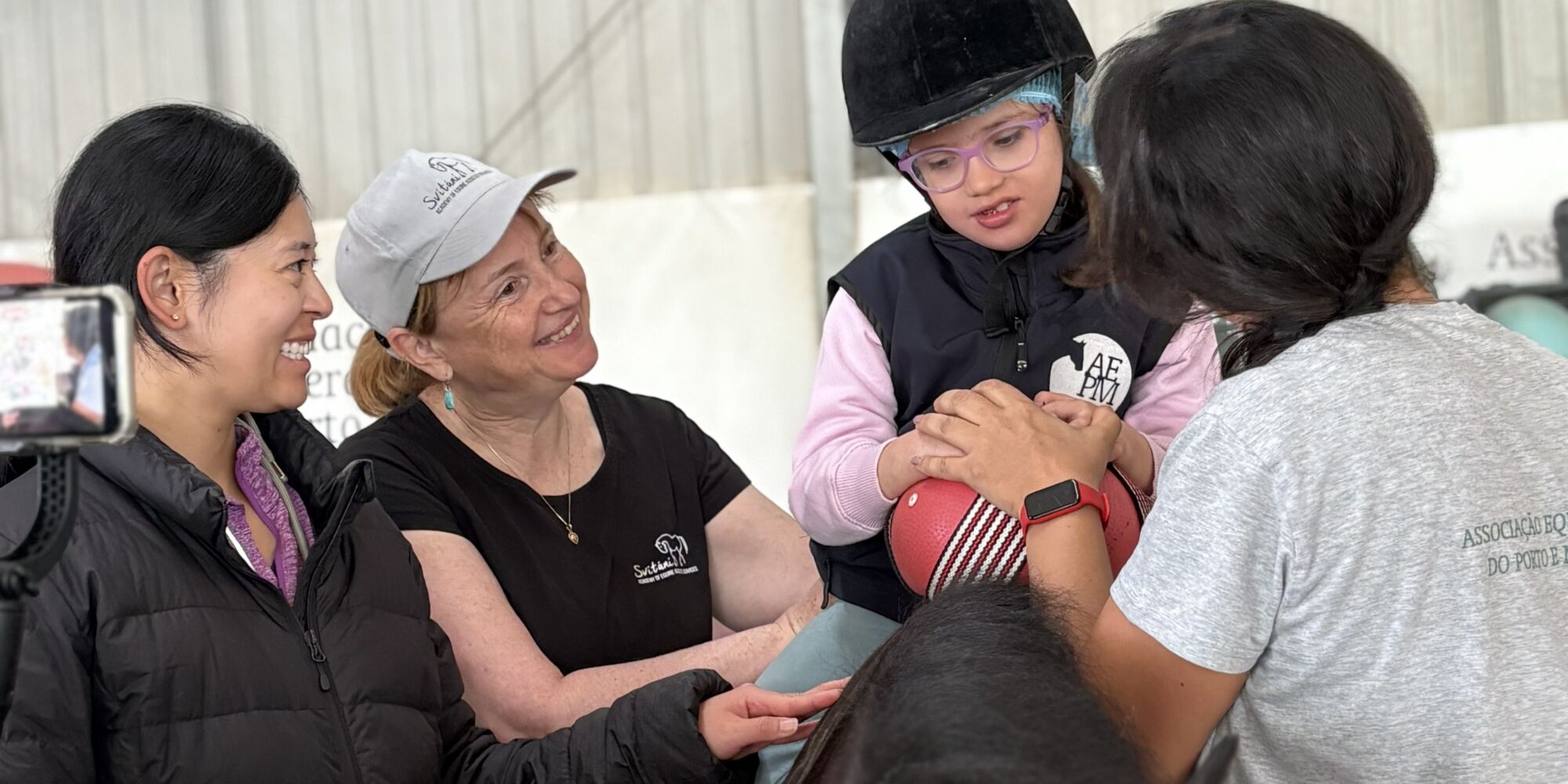
Before choosing a course, it is useful to stop and ask two simple questions: What is my current professional background? And what role do I actually want to have in Equine Assisted Services?
For somebody without a healthcare, psychology, or educational qualification, there are still many meaningful ways to be involved. In many centres, people work as assistants, equine handlers, side-walkers, stable support staff, or support equine preparation and welfare. These roles are valuable and require responsibility, practical skills, safety awareness, and an understanding of the equine itself.
Equine Assisted Services is not one profession, but a field where different roles require different competencies.
Some people with strong equine experience later decide to continue their education further and gradually move towards more specialised roles.
Healthcare professionals enter the field differently. A physiotherapist, occupational therapist, speech and language therapist, psychologist, psychotherapist, or medical doctor already brings professional qualifications to the environment. In this case, Equine Assisted Therapy becomes an extension of their original profession, not a completely new profession created by a course.
For these professionals, education in Equine Assisted Services usually focuses on understanding equine movement, positioning, safety, indications, contraindications, teamwork, and adapting clinical skills into a dynamic outdoor environment.
There are also people coming from education, pedagogy, coaching, or social work. Depending on their qualifications, country regulations, and area of practice, they may work in areas such as Equine Assisted Learning, psychosocial support, educational programmes, or coaching.
This is why I would personally be careful with very simplified promises such as:
“This course qualifies you for everything.”
Good practice usually develops step by step. Different roles require different competencies, and meaningful work in this field takes time, supervision, and ongoing learning.
When choosing an education path, several factors are worth paying attention to.
Who teaches the programme?
What practical experience do they actually have?
Does the programme clearly define professional roles and limits?
Does it discuss safety and equine welfare seriously?
Is there supervised practice or only theory?
Does the education encourage interdisciplinary cooperation?
And does it teach people to think critically rather than simply memorise activities?
These questions matter.
Because in Equine Assisted Services, responsibility towards both clients and equines is significant. We work with vulnerable people, dynamic environments, and living animals. Enthusiasm is valuable, but it should be supported by knowledge and clear professional boundaries.
It is also important to understand that education in this field rarely ends with one course. Most experienced practitioners continue learning throughout their careers because the field itself continues evolving. Research develops, standards develop, and our understanding of equine welfare and human-equine interaction also develops.
Personally, I would be cautious about offering services immediately after very limited training. Not because enthusiasm is wrong, but because responsibility deserves preparation.
At the same time, it is encouraging to see more people actively searching for structured education, supervision, accreditation, and recognised qualifications. In many countries, Equine Assisted Services are becoming more professional, more reflective, and more interdisciplinary than they were years ago.
And that is probably one of the most positive developments I have seen during my years in practice.
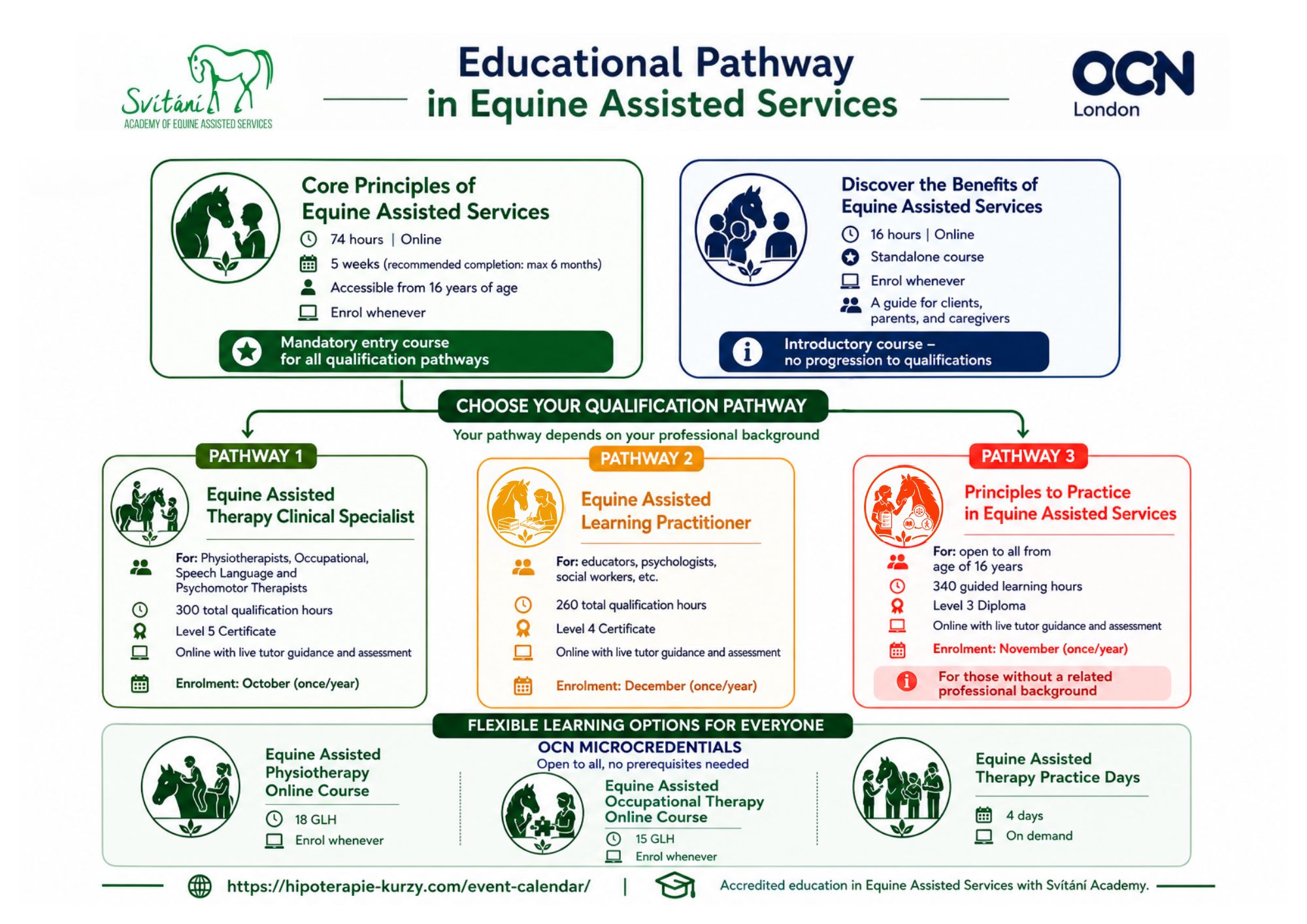
Want to build a stronger foundation before working in Equine Assisted Services?
Core Principles of Equine Assisted Services is a 74-hour online foundation programme designed to help you understand professional roles, safety, equine welfare, terminology and the knowledge you need for your next step.
Vera’s EAS Lens is a space where I share my professional reflections, clinical reasoning, and international experience in Equine Assisted Therapy and Services. Drawing on many years of practice, education, and collaboration across countries and disciplines, I look at EAS through an expert, critical, and ethical lens. This blog is written for professionals, students, and organisations who wish to understand EAS beyond trends and enthusiasm, and to anchor their work in quality, responsibility, and meaningful practice.
Vera EAS Lens – Blog Subscription
Follow my blog on FB, Ins and LinkedIn #VeraEASLens

Enjoyed this article? Download our free e‑book “10 Essential Insights into Equine Assisted Services” and discover practical tips you can start using today.
Would you like more inspiration, ideas, and professional insights? Join our Svítání newsletter and never miss an article, event, or course update.
Curious to deepen your knowledge in Equine Assisted Services? Explore our courses designed by experienced practitioners and start your learning journey with Svítání today.
 Do I Need My Own Centre to Work in Equine Assisted Services?
Do I Need My Own Centre to Work in Equine Assisted Services?
 Do I Need Horse Experience to Work in Equine Assisted Services?
Do you need horse experience to work in Equine Assisted Services? Learn…
 How Long Does It Take to Qualify in Equine Assisted Services?
How long does it take to qualify in Equine Assisted Services? Vera…