Assisted Sitting Position: Why Are We Still Doing This?
There is one position that I continue to see in Equine Assisted Services that always makes me stop and ask questions: the assisted sitting position on an equine. By assisted sitting, or tandem or back-riding position, I mean a client sitting on the equine with another person seated directly behind them. Sometimes it is a therapist. Sometimes it is a parent. Sometimes it is a volunteer. Sometimes it is simply somebody available that day.
Twenty-five years ago, I used this position myself. Most practitioners did. At that time, we knew less about movement development, positioning, postural control, and the effect of equine movement on the body. We worked with the knowledge available to us. But our field has developed considerably since then. We understand much more about psychomotor development, motor control, functional positioning, and the influence of equine movement on the human body. That is why I find it increasingly difficult to understand why assisted sitting remains such a common practice in some centres.
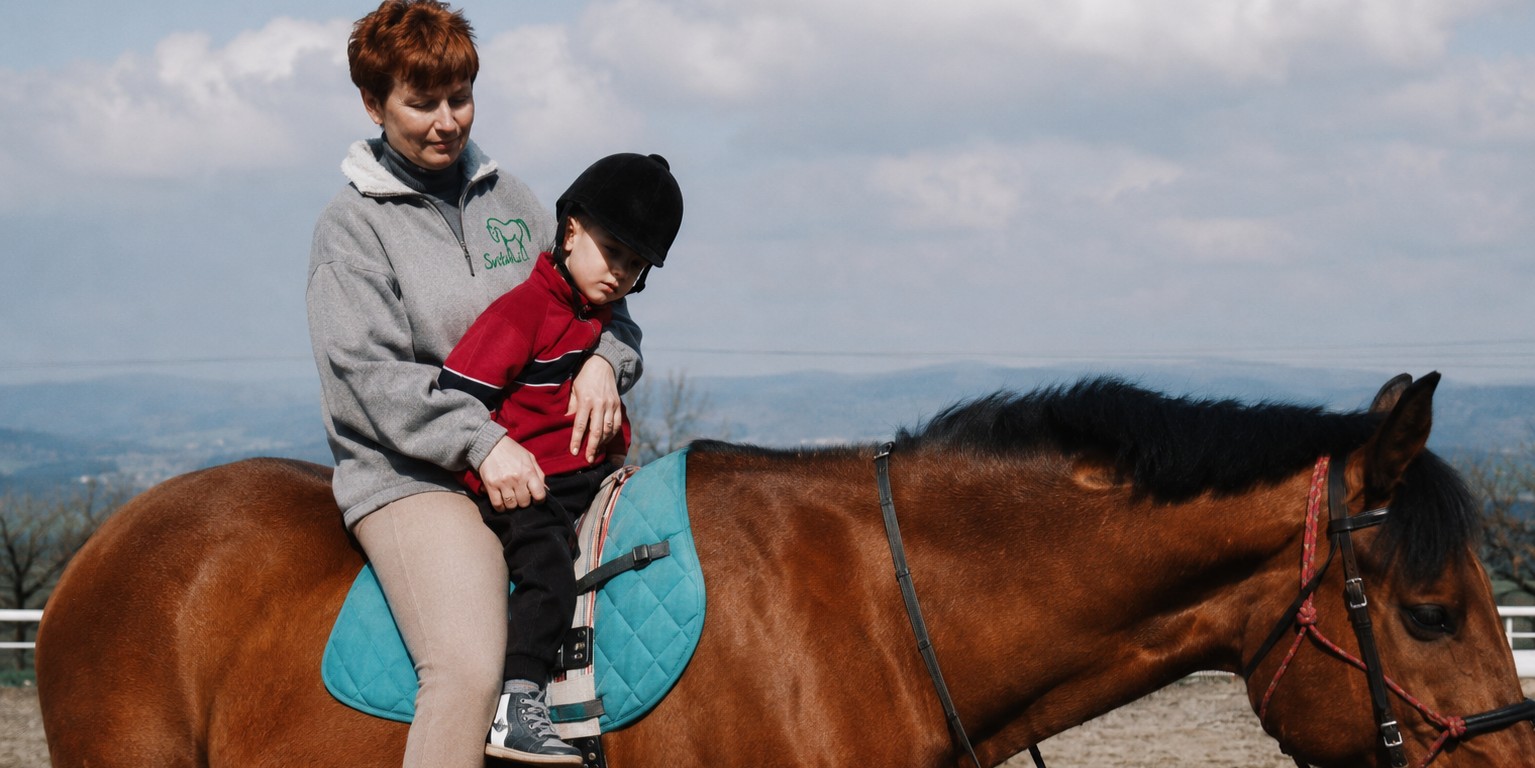
What concerns me most is that assisted sitting is often used without a clear therapeutic reason. A child cannot sit independently, so another person is placed behind them. A child looks insecure, so another person is placed behind them. The equine is too tall, so another person is placed behind them. The practitioner wants the child to remain seated, so another person is positioned behind them. The solution always seems to be the same, yet very few people stop to ask a more important question: Is sitting in the right position in the first place actually?
If a client is not developmentally ready for sitting, placing another person behind them does not solve the problem. The client is still not ready to sit. The support may prevent a fall, but it does not automatically create functional postural control, meaningful trunk and pelvic activity. In many cases, we are simply maintaining a position rather than addressing the reason the client struggles with it. To me, this is where the real concern begins. Instead of adapting the position to the client’s abilities, we often adapt another person to the position we want to keep.
Just because something was common twenty-five years ago does not mean it represents good practice today.
Safety is another area that deserves closer examination. Assisted sitting is frequently justified as a safer option, yet I would argue that it often creates additional risks. We now have two people on the equine instead of one. Weight distribution changes, movement patterns change, and the entire situation becomes more complex. If there is a loss of balance, an emergency stop, or a dismount, two bodies are involved instead of one. Can you imagine the fall situation?
Equine welfare is another issue. Where is the second person sitting? Most often, directly over the equine’s lumbar region. The assisted sitting position often places additional weight. If we are serious about protecting our equine partners, this deserves far more consideration than it usually receives.
I am particularly uncomfortable when the supporting person is not a therapist. I have seen parents, volunteers, assistants, and stable staff used in this role. If the person providing support does not understand body alignment, postural control, movement facilitation, and the therapeutic goals of the session, what exactly are they contributing? Furthermore, if they are not highly competent riders with an independent seat, they may introduce additional risk to both the client and the equine.
I know this article may make some practitioners uncomfortable, and that is intentional. Our field should be willing to question practices that have become routine. Just because something was common twenty-five years ago does not mean it represents good practice today. As our knowledge develops, our practice should develop with it.
For me, assisted sitting is no longer the starting point and, in most situations, not the preferred option. There are usually better, safer, and more effective ways to help a client engage with equine movement while also protecting the equine. The question is not whether assisted sitting can be done. The question is whether we have become so accustomed to doing it that we no longer stop to ask whether it is the best choice.
Věra’s EAS Lens is a space where I share my professional reflections, clinical reasoning, and international experience in Equine Assisted Therapy and Services. Drawing on many years of practice, education, and collaboration across countries and disciplines, I look at EAS through an expert, critical, and ethical lens. This blog is written for professionals, students, and organisations who wish to understand EAS beyond trends and enthusiasm, and to anchor their work in quality, responsibility, and meaningful practice.
If you are curious to learn more about Equine Assisted Services and how they are understood and practised today, you can explore further information here:
https://hipoterapie-kurzy.com/eas/
Vera EAS Lens – Blog Subscription: https://shorturl.at/oWzLS
Follow my blog on FB, Instagram, and LinkedIn #VeraEASLens.

Enjoyed this article? Download our free e‑book “10 Essential Insights into Equine Assisted Services” and discover practical tips you can start using today.
Would you like more inspiration, ideas, and professional insights? Join our Svítání newsletter and never miss an article, event, or course update.
Curious to deepen your knowledge in Equine Assisted Services? Explore our courses designed by experienced practitioners and start your learning journey with Svítání today.
 The Silent Load: Why Therapy Equines Shouldn’t Be Called Therapists
In modern discourse, it’s all too easy to conflate our Equine Assisted…
 Enthusiastic but not yet qualified
Can enthusiasm replace training in Equine Assisted Therapy? A professional reflection on…
 What I Wish I Had Known Before Working in Equine Assisted Services
What should you know before working in Equine Assisted Services? Vera Lantelme-Faisan…