What Does an Equine-Assisted Therapy Clinical Specialist Actually Do?
The longer I work in Equine Assisted Therapy, the more convinced I become that clinical reasoning is what defines advanced practice. Clinical Specialists are distinguished not by what they do, but by how they think before, during and after every intervention. Advanced techniques and extensive knowledge are important, but they are not, in my view, the defining characteristics of advanced clinical practice.
Over the years, I have met professionals with impressive qualifications whose clinical judgment was surprisingly weak. I have also worked alongside practitioners with far fewer certificates but exceptional clinical reasoning. They observed carefully, recognised subtle changes in both the participant and the equine, adapted their intervention when circumstances changed, and could explain every clinical decision they made. That ability is not another technique. It is a way of thinking that develops through education, experience and continuous professional reflection.
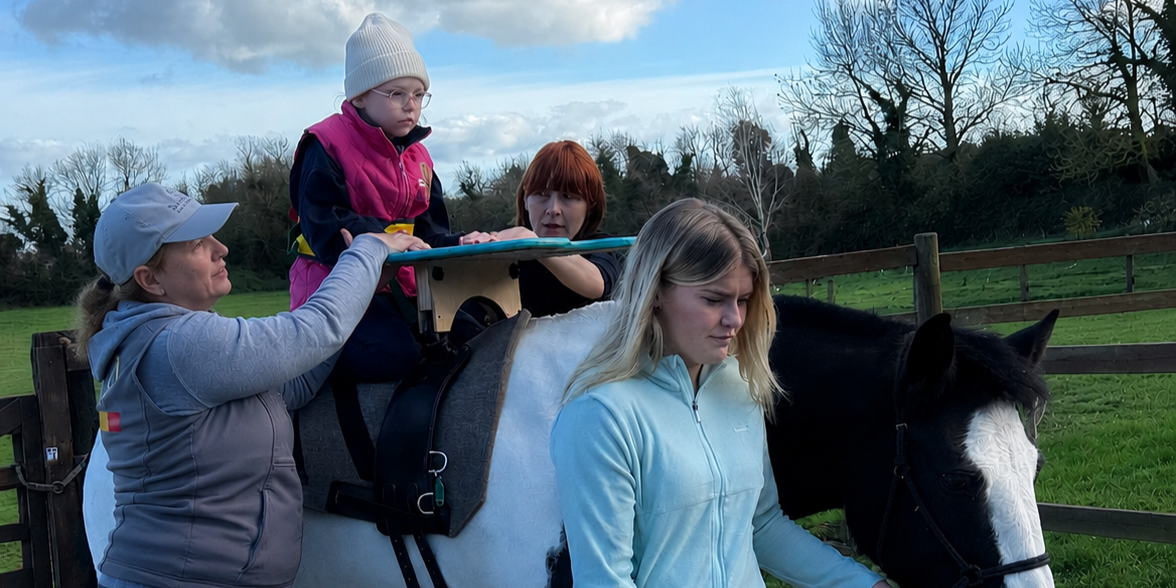
When I plan a therapy session, I begin by asking what this participant needs today. Has anything changed since the previous session? What are the priorities at this stage of rehabilitation? Is Equine Assisted Therapy still the most appropriate intervention today, or would another approach better serve the participant? After answering those questions, I begin designing the session. For a Clinical Specialist, the intervention is the result of clinical reasoning.
For me, this is the difference between delivering a therapy session and providing advanced clinical care. A Clinical Specialist begins with clinical reasoning, and the intervention results from that process.
Before making almost any clinical decision, I ask myself one simple question: Why? Why this equine? Why this position? Why this environment? Why this pace? Why this goal? If I cannot answer those questions clearly, I need to think again.
Clinical decisions should never be based on routine alone, no matter how successful that routine has been in the past.
No two participants are ever truly the same. Two children with the same diagnosis may have completely different physical abilities, sensory processing, communication, motivation, family circumstances and therapeutic priorities. A diagnosis provides valuable information, but it never replaces an individual clinical assessment. Every intervention should reflect the individual in front of us, not the diagnosis written in a medical report.
One of the strongest indicators of professional maturity is the confidence to decide that Equine Assisted Therapy is not the right intervention on a particular day. Postponing a session, changing the intervention completely or referring the participant elsewhere is not a failure. It is clinical reasoning in practice.
When I think about an Equine Assisted Therapy Clinical Specialist today, I picture a professional who accepts responsibility for every clinical decision they make. Someone who never stops asking, Why am I doing this? Because that question protects the participant, supports the equine and, ultimately, defines the quality of our profession.
Věra’s EAS Lens is a space where I share my professional reflections, clinical reasoning, and international experience in Equine Assisted Therapy and Services. Drawing on many years of practice, education, and collaboration across countries and disciplines, I look at EAS through an expert, critical, and ethical lens. This blog is written for professionals, students, and organisations who wish to understand EAS beyond trends and enthusiasm, and to anchor their work in quality, responsibility, and meaningful practice.
Vera EAS Lens – Blog Subscription: https://shorturl.at/oWzLS
Follow my blog on FB, Ins and LinkedIn #VeraEASLens

Enjoyed this article? Download our free e‑book “10 Essential Insights into Equine Assisted Services” and discover practical tips you can start using today.
Would you like more inspiration, ideas, and professional insights? Join our Svítání newsletter and never miss an article, event, or course update.
Curious to deepen your knowledge in Equine Assisted Services? Explore our courses designed by experienced practitioners and start your learning journey with Svítání today.
 The Silent Load: Why Therapy Equines Shouldn’t Be Called Therapists
In modern discourse, it’s all too easy to conflate our Equine Assisted…
 Enthusiastic but not yet qualified
Can enthusiasm replace training in Equine Assisted Therapy? A professional reflection on…
 What I Wish I Had Known Before Working in Equine Assisted Services
What should you know before working in Equine Assisted Services? Vera Lantelme-Faisan…