Do I Need My Own Centre to Work in Equine Assisted Services?
Do you need your own centre before you can begin working in Equine Assisted Services? No. In my experience, many practitioners start in existing equestrian centres, rehabilitation settings, schools, charities or other organisations where suitable equines and facilities are already available.
I actually think this can be a very practical way to begin. Running a centre brings a completely different layer of responsibility: staff, maintenance, facilities, administration, insurance, equine management and finances. If your main expertise is physiotherapy, psychology, education, Equine Assisted Learning or another specialist area, taking on all of that immediately can make the beginning unnecessarily heavy.
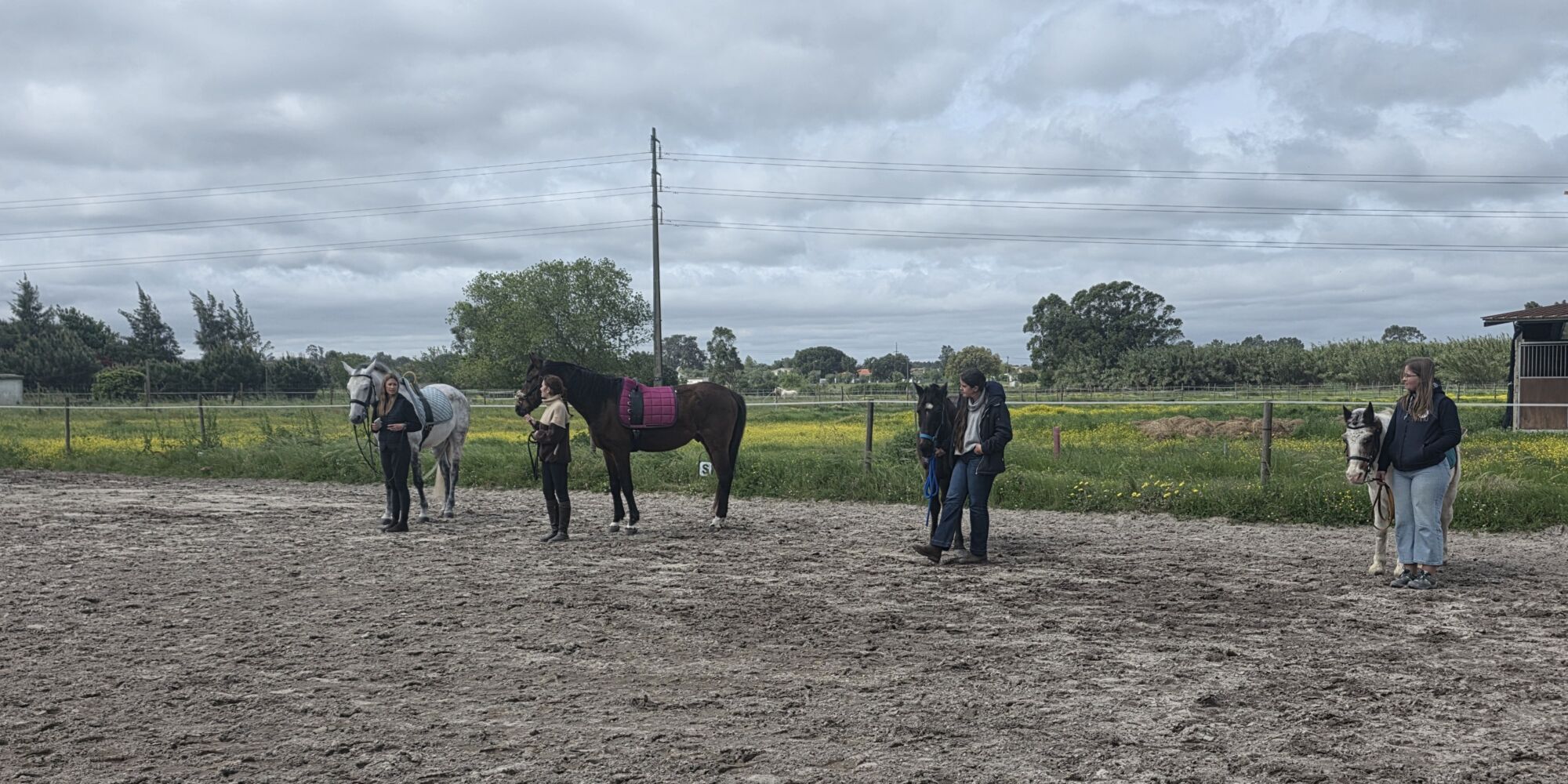
Existing centres can offer a very strong base
A well-run equestrian centre may already have many of the elements required for Equine Assisted Services: experienced equine staff, suitable equines, an arena or working area, storage, safety systems and established daily routines.
The quality of the collaboration matters more than ownership itself. A therapist may bring clinical knowledge; an educator may bring learning goals. At the same time, the equine professional may know the individual equines, their behaviour, training, workload and daily management in far greater detail. I have always valued this kind of combination because each person contributes something different to the service.
There are many possible arrangements. Some practitioners rent a facility for certain days or hours. Others work under a longer-term agreement with an equestrian centre. Some programmes are based within schools, charities or rehabilitation services and work in partnership with an external equine provider.
You can build a strong Equine Assisted Services programme without owning the facility, provided the environment and collaboration genuinely support the work.
For someone starting, this can reduce financial pressure and give valuable time to understand how the service really functions before taking on a whole centre.
The facility has to work for the clients as well as the equines
A beautiful stable or arena may still be unsuitable for the people you want to work with. I would look carefully at access, parking, toilets, surfaces, transfer areas, noise, shelter, and the ability to create a calm space when needed.
A centre designed for ordinary riding lessons may need adaptation for therapy, learning or mental health work. A wheelchair user may need a very different route into the working area. Some clients need privacy. Others need more space, less stimulation or specific equipment. The needs vary considerably depending on the service.
The equines also need appropriate conditions around the programme. Their turnout, social contact, rest, training and workload continue beyond the client sessions. A centre can have excellent facilities and still be unsuitable if the equines’ daily management does not support the type of work being offered.
These details become much clearer once you spend time working in real settings. They are also easy to miss when someone is mainly focused on finding an arena and a few horses.
Clear agreements make collaboration easier
When several people or organisations work together, clarity becomes very important. I would want to know who is responsible for the equines, who prepares them, who monitors workload, who manages the facility and how decisions are made when something changes.
Everyone involved also needs to understand insurance, equipment, emergency procedures, cancellations, and access to the working areas. These don’t need to create unnecessary bureaucracy, but they are much easier to manage when discussed before a problem arises.
I have seen how easily different professions can assume that another person is responsible for something. The therapist may be concentrating on the client, the equine professional on the equine, and the centre manager on the facility. Good communication brings those perspectives together and helps the team work as one service rather than several separate people sharing the same arena.
For regular collaboration, I prefer to write down key responsibilities. It gives everyone the same reference point and reduces misunderstandings later.
Shared facilities also have practical limits
Working in someone else’s centre usually involves compromise. The arena may be needed for lessons. Another group may be nearby. The timetable may not always fit perfectly, and you may not be able to change the environment exactly as you would in your own facility.
Some compromises are easy to manage. Others can interfere with the work. If access changes constantly or the centre cannot provide the conditions your clients need, the collaboration can become frustrating very quickly.
This is also where experience becomes useful. After working in a shared centre for some time, you begin to understand which features are essential for your service and which ones are simply convenient. That knowledge is extremely useful if you later decide to establish your own facility.
When ownership becomes useful
For some practitioners, owning or managing a centre eventually becomes the right choice. It gives greater control over the timetable, equipment, environment, equine management and future development of the programme.
Others remain very happy working through long-term partnerships. They can focus on their area of expertise while the facility and equine management stay with people who already have strong experience in those areas.
Both models can work. The decision depends on the type of service, the people involved, the available facilities and how much responsibility you actually want to carry outside the client work.
You do not need your own centre to begin working in Equine Assisted Services. A suitable facility, reliable collaboration and clear responsibilities can provide an excellent foundation, and they may remain the right model for many years.
Want to build a stronger foundation before working in Equine Assisted Services?
Core Principles of Equine Assisted Services is a 74-hour online foundation programme designed to help you understand professional roles, safety, equine welfare, terminology and the knowledge you need for your next step.
This article is part of a series addressing the practical questions people face when considering a career in Equine Assisted Services.
The next article in the series will explore: What Can You Actually Do When Equine Assisted Services Barely Exist in Your Country?
About Vera’s Vera’sns
Vera’s EAS Lens – An Expert Guide to Equine Assisted Therapy and Services is written by Vera Lantelme-Faisan, MSc, a physiotherapist, educator and international lecturer with more than 25 years of clinical and teaching experience in Equine Assisted Therapy and Services.
The blog examines professional practice, education, safety, clinical decision-making and equine welfare through the lens of real experience. It is written for practitioners, learners and anyone seeking a clearer understanding of responsible Equine Assisted Services.
Vera EAS Lens – Blog Subscription: https://shorturl.at/oWzLS
Follow my blog on FB, Ins and LinkedIn #VeraEASLens

Enjoyed this article? Download our free e‑book “10 Essential Insights into Equine Assisted Services” and discover practical tips you can start using today.
Would you like more inspiration, ideas, and professional insights? Join our Svítání newsletter and never miss an article, event, or course update.
Curious to deepen your knowledge in Equine Assisted Services? Explore our courses designed by experienced practitioners and start your learning journey with Svítání today.
 Do I Need Horse Experience to Work in Equine Assisted Services?
Do you need horse experience to work in Equine Assisted Services? Learn…
 How Long Does It Take to Qualify in Equine Assisted Services?
How long does it take to qualify in Equine Assisted Services? Vera…
 Can I Study Equine Assisted Services Online?
Can you study Equine Assisted Services online? Learn where online education works…