Why I Do Not Use Helmets in My Equine Assisted Physiotherapy Sessions
In many equine settings, wearing a helmet is considered standard and unquestioned. I understand this perspective, and I respect the intention behind it. Safety is essential in any work involving equines. However, in my own practice as a physiotherapist working within Equine Assisted Therapy, I sometimes make a different decision. This decision is not based on preference, but on clinical reasoning.
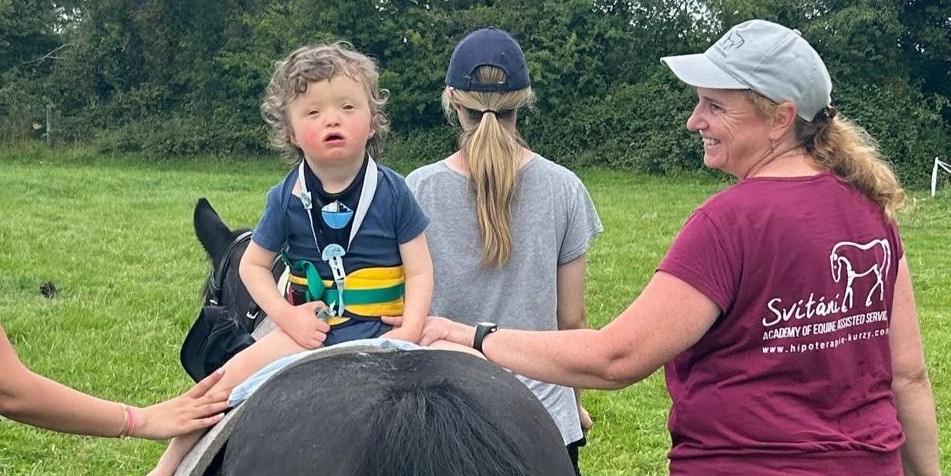
I work primarily with babies from around three months of age and young children who present with limited head and trunk control. In many cases, this is related to weakness. For these clients, the organisation of posture is central to the therapy. The position of the head directly influences the trunk, balance reactions, and the overall coordination of movement. Adding the weight and shape of a helmet can interfere with this delicate organisation. It may shift the head position, increase the effort required to maintain alignment, and contribute to compensatory patterns that reduce movement quality.
This becomes even more relevant in therapeutic positions such as prone or backwards-sitting, where head and trunk control are already challenged. In these situations, a helmet can limit natural adjustments or place additional strain on the child. From a physiotherapy perspective, if something does not support the therapeutic goal, it needs to be reconsidered.
My decision about helmets is guided by one question: Does it support the therapeutic goal in this specific situation?
I am fully aware that Equine Assisted Therapy takes place in a real environment, with a living animal. There is always an element of unpredictability, and risk can never be completely eliminated. My decision not to use helmets in certain sessions is therefore not about ignoring safety, but about managing it differently.
In my practice, safety is built through preparation. I work only with equines that are carefully selected, well-trained, and consistently cooperative. The equine is always led by an experienced handler, and I remain fully focused on the child throughout the session. In most cases, there is also a second person supporting from the other side. This creates a structured and controlled environment in which the child is continuously monitored and supported.
I do not underestimate the importance of preparation. Without a well-prepared equine and a qualified team, I would not consider providing a therapy session. I am aware that a helmet alone does not ensure safety if the environment, the equine, or the team are not adequately prepared. Safety in Equine Assisted Therapy is not created by a single piece of equipment, but by the overall quality of the work.
My decision is therefore always based on a clinical question: Does the helmet support the therapeutic goal in this specific situation? If the answer is no, I choose not to use it. This decision is always accompanied by clear communication with parents or caregivers. I explain the reasoning behind the approach, the way the session is structured, and how safety is managed. I also ask for informed written consent, so that the decision is understood and shared.
This approach may not be appropriate in every setting, and I do not present it as a universal recommendation. It reflects my clinical reasoning within a specific context and population. What matters most is that decisions in Equine Assisted Therapy are made thoughtfully by qualified practitioners, with full awareness of both therapeutic goals and responsibility for the client and the equine.
Věra’s EAS Lens is a space where I share my professional reflections, clinical reasoning, and international experience in Equine Assisted Therapy and Services. Drawing on many years of practice, education, and collaboration across countries and disciplines, I look at EAS through an expert, critical, and ethical lens. This blog is written for professionals, students, and organisations who wish to understand EAS beyond trends and enthusiasm, and to anchor their work in quality, responsibility, and meaningful practice.
If you are curious to learn more about Equine Assisted Services and how they are understood and practised today, you can explore further information here:
https://hipoterapie-kurzy.com/eas/
Follow my blog on FB, Ins and LinkedIn #VeraEASLens

Enjoyed this article? Download our free e‑book “10 Essential Insights into Equine Assisted Services” and discover practical tips you can start using today.
Would you like more inspiration, ideas, and professional insights? Join our Svítání newsletter and never miss an article, event, or course update.
Curious to deepen your knowledge in Equine Assisted Services? Explore our courses designed by experienced practitioners and start your learning journey with Svítání today.
 What I Wish I Had Known Before Working in Equine Assisted Services
What should you know before working in Equine Assisted Services? Vera Lantelme-Faisan…
 What Does a Typical Working Day in Equine Assisted Services Look Like?
What does a typical day in Equine Assisted Services look like? Explore…
 What Can You Actually Do When Equine Assisted Services Barely Exist in Your Country?
Equine Assisted Services barely exist in your country? Learn how to begin…