Safety Belts in Equine Assisted Therapy: Help or Limitation?
Over the years in Equine Assisted Therapy, I have become very selective about equipment. Some tools create unnecessary barriers between the client and the equine’s movement. Others, when used properly, can genuinely improve the quality of the work. One of them is the safety belt.
I have been providing equine-assisted physiotherapy sessions for more than 25 years, but I discovered the safety belt only around 10 years ago. Since then, it has become an important part of my practice. What I appreciate most is not only the safety it provides but also how it can improve the overall quality of the session for both the client and the practitioner.
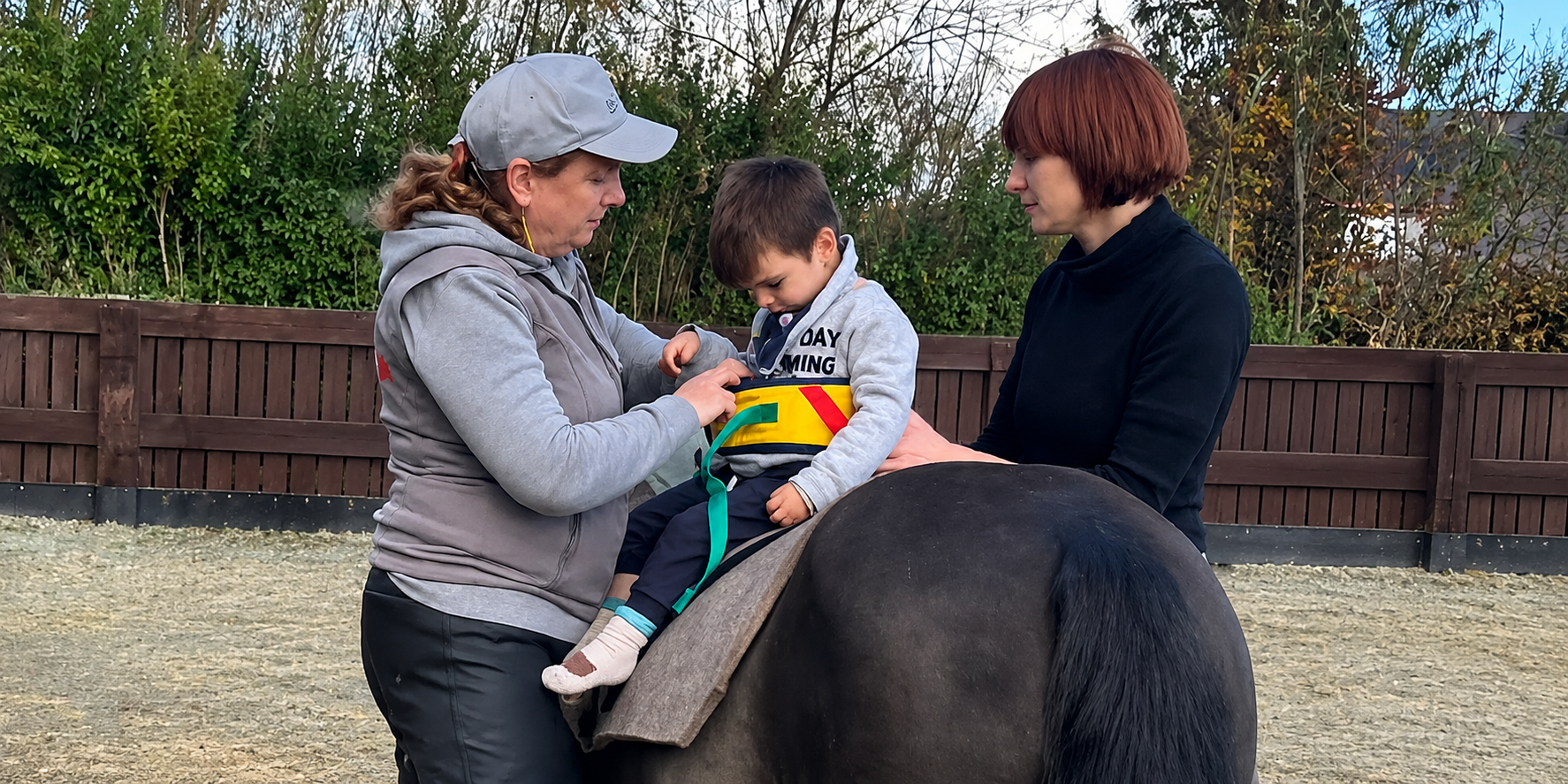
When used properly, the safety belt allows me to reduce unnecessary pressure and contact with the client. In some situations, especially in winter, children wear several layers of clothing or slippery overalls. To keep the child safely positioned on the equine, I previously had to increase the pressure I applied with my hands to prevent slipping. This is not ideal, as increased pressure can influence the client’s movement, comfort, and response.
With a safety belt, this changes. I can stay close to the client, remain attentive, and be ready to support when needed, but without holding or gripping. This creates a lighter, more respectful contact with the client. The transmission of movement from the equine is less disrupted.
When used properly, a safety belt can increase both safety and the quality of the therapeutic work without limiting the client’s movement.
There is also an important aspect for the practitioner. Working next to the equine for several hours a day requires consistency, attention, and physical endurance. The safety belt reduces physical strain and allows the practitioner to maintain a better posture and a more stable position over time. This directly affects the quality of the work, especially during intensive therapy days.
At the same time, like any piece of equipment, the safety belt can be used incorrectly. One of the most common issues I have observed is that the belt is fastened too tightly. It is important to remember that the trunk’s shape and volume change between standing and sitting. A belt that feels comfortable when the client is standing may become restrictive once they are seated. If the belt is too tight, it can limit breathing, restrict movement, and reduce the natural response to the equine’s rhythm.
The goal is to find a balance. The belt should provide safety, particularly in situations such as an unexpected movement or the need for a quick dismount, but it should not block the transmission of movement. The client should still be able to feel, adapt, and respond to the equine.
Another important aspect is how the practitioner positions their hands and body in relation to the client. The presence of a safety belt does not mean that the practitioner becomes passive. On the contrary, it requires a different quality of attention. The practitioner should remain close, in light contact, without leaning, pulling, or placing weight on the belt, as this may compromise symmetry, reduce movement quality, and limit the client’s natural responses.
In this sense, the safety belt is not simply a protective tool. It becomes part of the therapeutic environment. When used thoughtfully, it can support safety and enhance the quality of interaction during the session.
As with all equipment in Equine Assisted Services, the question is not whether to use it, but how and why. A safety belt can be very helpful, but only when it is used in a way that supports the therapy.
Věra’s EAS Lens is a space where I share my professional reflections, clinical reasoning, and international experience in Equine Assisted Therapy and Services. Drawing on many years of practice, education, and collaboration across countries and disciplines, I look at EAS through an expert, critical, and ethical lens. This blog is written for professionals, students, and organisations who wish to understand EAS beyond trends and enthusiasm, and to anchor their work in quality, responsibility, and meaningful practice. If you are curious to learn more about Equine Assisted Services and how they are understood and practised today, you can explore further information here:
https://hipoterapie-kurzy.com/eas/
Vera EAS Lens – Blog Subscription
Follow my blog on FB, Ins and LinkedIn #VeraEASLens

Enjoyed this article? Download our free e‑book “10 Essential Insights into Equine Assisted Services” and discover practical tips you can start using today.
Would you like more inspiration, ideas, and professional insights? Join our Svítání newsletter and never miss an article, event, or course update.
Curious to deepen your knowledge in Equine Assisted Services? Explore our courses designed by experienced practitioners and start your learning journey with Svítání today.
 The Silent Load: Why Therapy Equines Shouldn’t Be Called Therapists
In modern discourse, it’s all too easy to conflate our Equine Assisted…
 Enthusiastic but not yet qualified
Can enthusiasm replace training in Equine Assisted Therapy? A professional reflection on…
 What I Wish I Had Known Before Working in Equine Assisted Services
What should you know before working in Equine Assisted Services? Vera Lantelme-Faisan…