What Looks Like Improvement May Be Overload
One of the most important skills in Equine Assisted Services is learning to observe what is really happening in the client’s body.
This sounds obvious, but in practice it is not always easy.
I sometimes watch videos from sessions or visit centres where the client appears to be sitting beautifully upright. The body seems stable. The practitioner is pleased because the client looks stronger, taller, and more engaged than before.
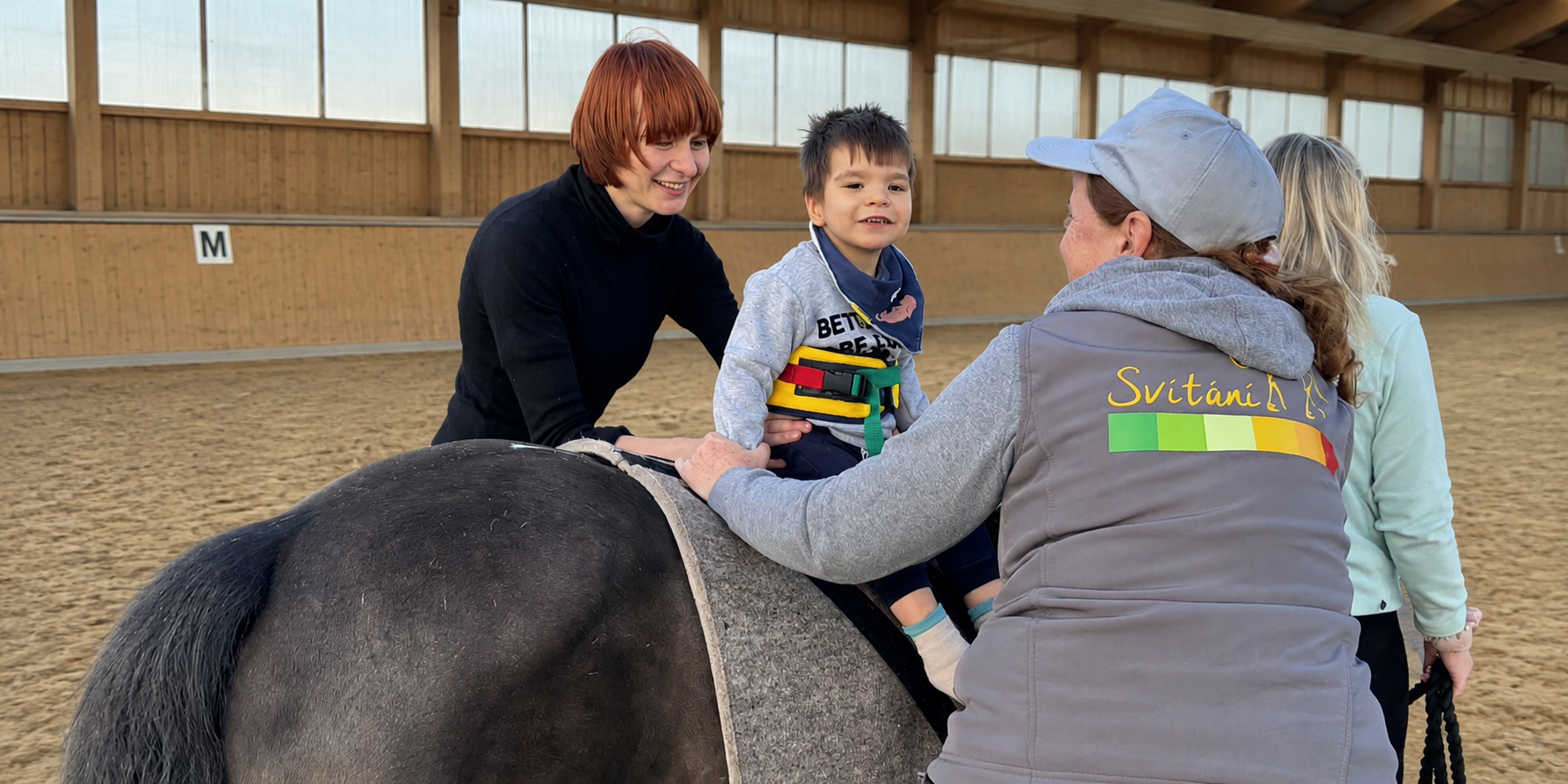
At first glance, it may look like success.
But is it?
This is where knowledge, clinical observation, and professional competence become essential.
Not every upright posture represents desired postural control. Not every trunk activity is a functional trunk activity. Sometimes the body is not engaged and responding. Sometimes it is simply protecting itself.
The difference matters.
When a person feels safe and able to cope with the movement, there is flow. You see fluent movement, activity, and adaptability. The body receives information and responds to it. There is movement within stability.
When a person feels overwhelmed, the picture can look very different.
The body may become rigid. Instead of muscle synergy, stiffness develops, and certain muscle groups become overloaded. The trunk appears active, but there is little adaptability. The shoulders rise. Breathing becomes shallow. The pelvis stops moving. The client’s facial expression may become fixed and serious, often misinterpreted as concentration. Instead of responding to the movement, the body begins to resist it.
What looks like improvement may actually be overload, and what looks like stability may actually be protection.
From the outside, the client may appear to be sitting beautifully straight. Inside, however, the central nervous system may be working very hard simply to cope.
I call this “fighting for life”.
Of course, the client is not actually in danger. But the nervous system may perceive the situation as overwhelming, unpredictable, or simply beyond its current ability to process. When that happens, survival strategies begin to dominate.
The client stiffens.
And this is where mistakes can become harmful.
A practitioner without sufficient education or understanding may interpret this increased trunk activity as improvement. They may increase the challenge, add more activities, ask for more responses, and feel pleased with the apparent progress.
Meanwhile, the client’s body may be telling a completely different story.
What looks like improvement may actually be overload.
What looks like stability may actually be a protective response.
And what is repeatedly practised may become a compensatory pattern rather than a functional one.
The body is often more honest than words.
A client may tell us that they like the session. Parents may tell us that their child enjoys coming. Both can be true. But they usually do not know what to look for during a session. They trust the practitioner and their expertise. If something does not feel right, they may doubt their own judgment rather than question the professional.
Enjoyment does not automatically mean that the body is ready for the level of challenge being presented.
This is why I always encourage practitioners to look beyond the activity itself.
- Look at the pelvis.
- Look at the breathing.
- Look at the quality of movement.
- Look at whether the trunk is responding or simply holding.
And ask yourself a difficult question: Do I have the education, qualifications, and clinical understanding to recognise the difference?
Because if we cannot recognise the difference between engagement and stiffness, we may unintentionally reinforce the very patterns we should be helping the client overcome.
Sometimes the best decision is not to add another activity. Sometimes it is to slow down, simplify, improve positioning, adjust the equine movement, or reduce the demands placed on the client.
Because our goal is not to create a body that can hold itself rigidly against movement. Our goal is to support a body that can receive movement, respond to it, and organise itself efficiently. The difference may appear small. The effect can be enormous.
Vera’s EAS Lens is a space where I share my professional reflections, clinical reasoning, and international experience in Equine Assisted Therapy and Services. Drawing on many years of practice, education, and collaboration across countries and disciplines, I look at EAS through an expert, critical, and ethical lens. This blog is written for professionals, students, and organisations who wish to understand EAS beyond trends and enthusiasm, and to anchor their work in quality, responsibility, and meaningful practice.
If you are curious to learn more about Equine Assisted Services and how they are understood and practised today, you can explore further information here:
https://hipoterapie-kurzy.com/eas/
Vera EAS Lens – Blog Subscription: https://shorturl.at/oWzLS
Follow my blog on FB, Ins and LinkedIn #VeraEASLens

Enjoyed this article? Download our free e‑book “10 Essential Insights into Equine Assisted Services” and discover practical tips you can start using today.
Would you like more inspiration, ideas, and professional insights? Join our Svítání newsletter and never miss an article, event, or course update.
Curious to deepen your knowledge in Equine Assisted Services? Explore our courses designed by experienced practitioners and start your learning journey with Svítání today.
 The Silent Load: Why Therapy Equines Shouldn’t Be Called Therapists
In modern discourse, it’s all too easy to conflate our Equine Assisted…
 Enthusiastic but not yet qualified
Can enthusiasm replace training in Equine Assisted Therapy? A professional reflection on…
 What I Wish I Had Known Before Working in Equine Assisted Services
What should you know before working in Equine Assisted Services? Vera Lantelme-Faisan…