How do I choose a therapy position on the equine?
Everything begins with the therapeutic goal. Before I think about sitting, prone, backward sitting or any other positions, I need to know what we want to achieve. Once that is clear, selecting the position becomes part of the intervention rather than an isolated decision.
Changing the therapy position changes the intervention. It changes the demands placed on the participant’s body, the movement they receive from the equine, the muscles that become active, the balance reactions that are challenged and the sensory information reaching the nervous system. A therapy position is far more than a way of placing a participant on the equine. It is one of the therapist’s most important clinical tools.
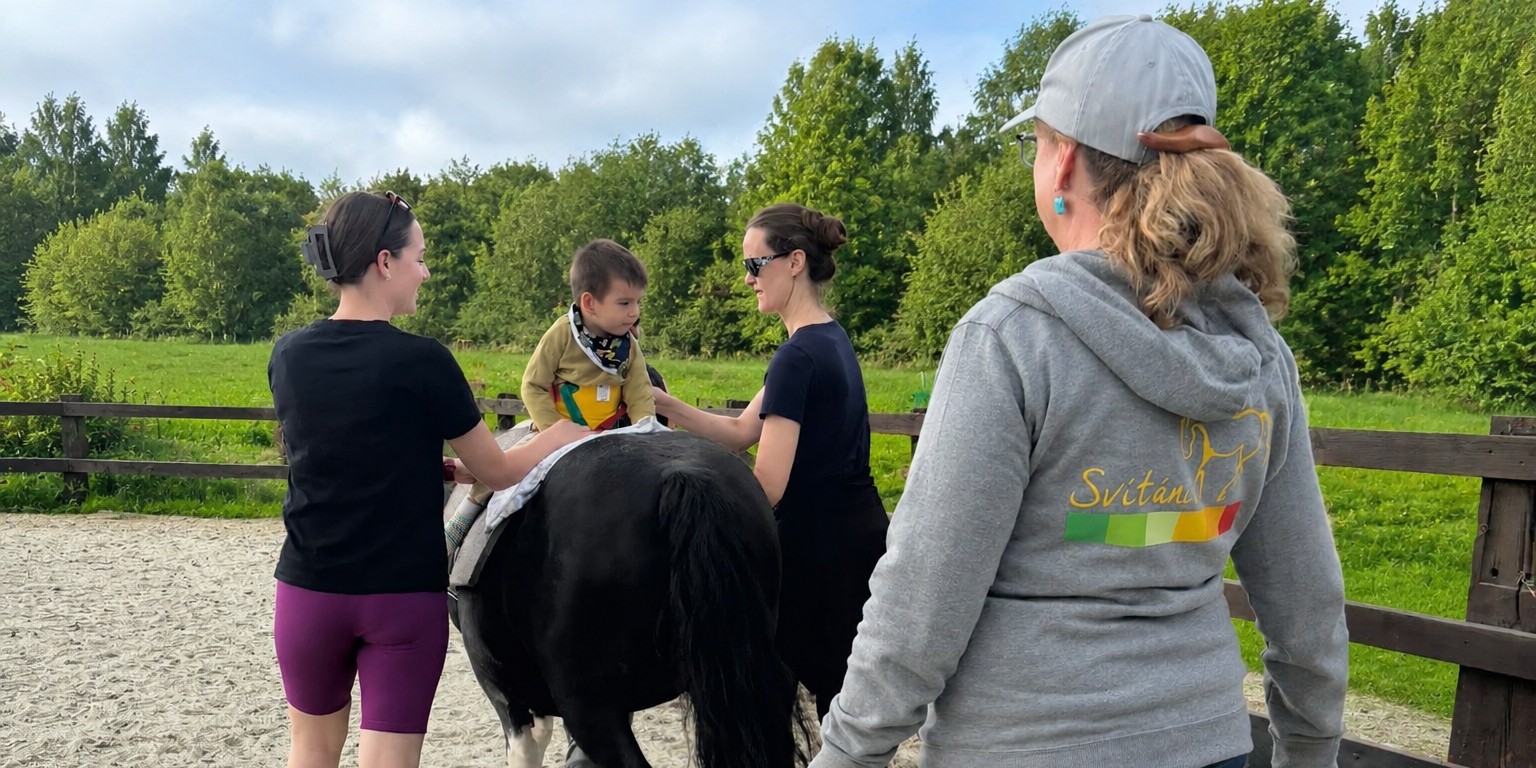
Assessment comes before positioning. Without understanding the participant’s abilities, limitations and therapeutic priorities, choosing a position becomes little more than guesswork. Every position should have a clear purpose, and every therapist should be able to explain why it has been chosen.
Age does not determine the position. Neither does the diagnosis. Neither do the participants’ preferences. A six-year-old child may walk independently and still have poor trunk activation. If my therapeutic goal is to facilitate core engagement, I am unlikely to choose sitting. I am much more likely to choose prone because it creates the conditions needed to activate the movement pattern I am trying to develop. My approach comes from developmental kinesiology, where movement quality always takes priority.
Therapy is not designed to provide the position the participant enjoys most.
The same principle applies to every therapy position. Backwards sitting, side sitting, kneeling or prone are never selected because they look interesting or because it is time for a change. They are selected because they best support the therapeutic goal.
One of the greatest challenges is resisting the temptation to choose the position that makes the participant happiest. Many children want to sit because sitting feels like riding. Parents are usually pleased when they see their child sitting independently on the equine. Neither of those reasons determines the therapy position. The therapeutic goal does.
If a child wants to enjoy riding, riding lessons are an excellent choice. Equine Assisted Therapy is different. Every position should help the participant achieve a specific therapeutic goal. If prone provides the best opportunity to activate the core, I will choose prone. If backwards sitting better supports the goal, I will choose backwards sitting. The participant’s favourite position is not always the most beneficial one.
Choosing the position is only the first step. I also explain why I have chosen it. Families do not need a lecture on biomechanics or developmental kinesiology, but they do need to understand the therapist’s approach.
The therapeutic goal comes first. The position follows. That sequence guides every therapy session I provide.
Věra’s EAS Lens is a space where I share my professional reflections, clinical reasoning, and international experience in Equine Assisted Therapy and Services. Drawing on many years of practice, education, and collaboration across countries and disciplines, I look at EAS through an expert, critical, and ethical lens. This blog is written for professionals, students, and organisations who wish to understand EAS beyond trends and enthusiasm, and to anchor their work in quality, responsibility, and meaningful practice.
Vera EAS Lens – Blog Subscription: https://shorturl.at/oWzLS
Follow my blog on FB, Ins and LinkedIn #VeraEASLens

Enjoyed this article? Download our free e‑book “10 Essential Insights into Equine Assisted Services” and discover practical tips you can start using today.
Would you like more inspiration, ideas, and professional insights? Join our Svítání newsletter and never miss an article, event, or course update.
Curious to deepen your knowledge in Equine Assisted Services? Explore our courses designed by experienced practitioners and start your learning journey with Svítání today.
 What Does a Typical Working Day in Equine Assisted Services Look Like?
What does a typical day in Equine Assisted Services look like? Explore…
 How Long Does It Take to Qualify in Equine Assisted Services?
How long does it take to qualify in Equine Assisted Services? Vera…
 Can I Study Equine Assisted Services Online?
Can you study Equine Assisted Services online? Learn where online education works…