When a Child Says No to Equine Assisted Therapy | Vera’s EAS Lens
The equine is ready, the team is waiting, and a child who has happily participated in previous sessions suddenly announces: “No.” Last time, they did not want to leave. Today, apparently, we are not getting started.
I have experienced this many times in my practice. Sometimes I notice a connection with the atmosphere around the family: a tense arrival, a difficult morning, something that seems to come into the session with them. That is an observation, rather than an explanation I can assume. But it has made me pay attention to the whole arrival, including how we adults respond.
My instinct is not always to ask more questions. With some children I know well, I have found that more talking, more reassurance and more discussion about how they feel can make starting harder. We gather around, ask what is wrong, offer another explanation, and wait. Before long, getting onto the equine becomes a much bigger event than it needs to be.
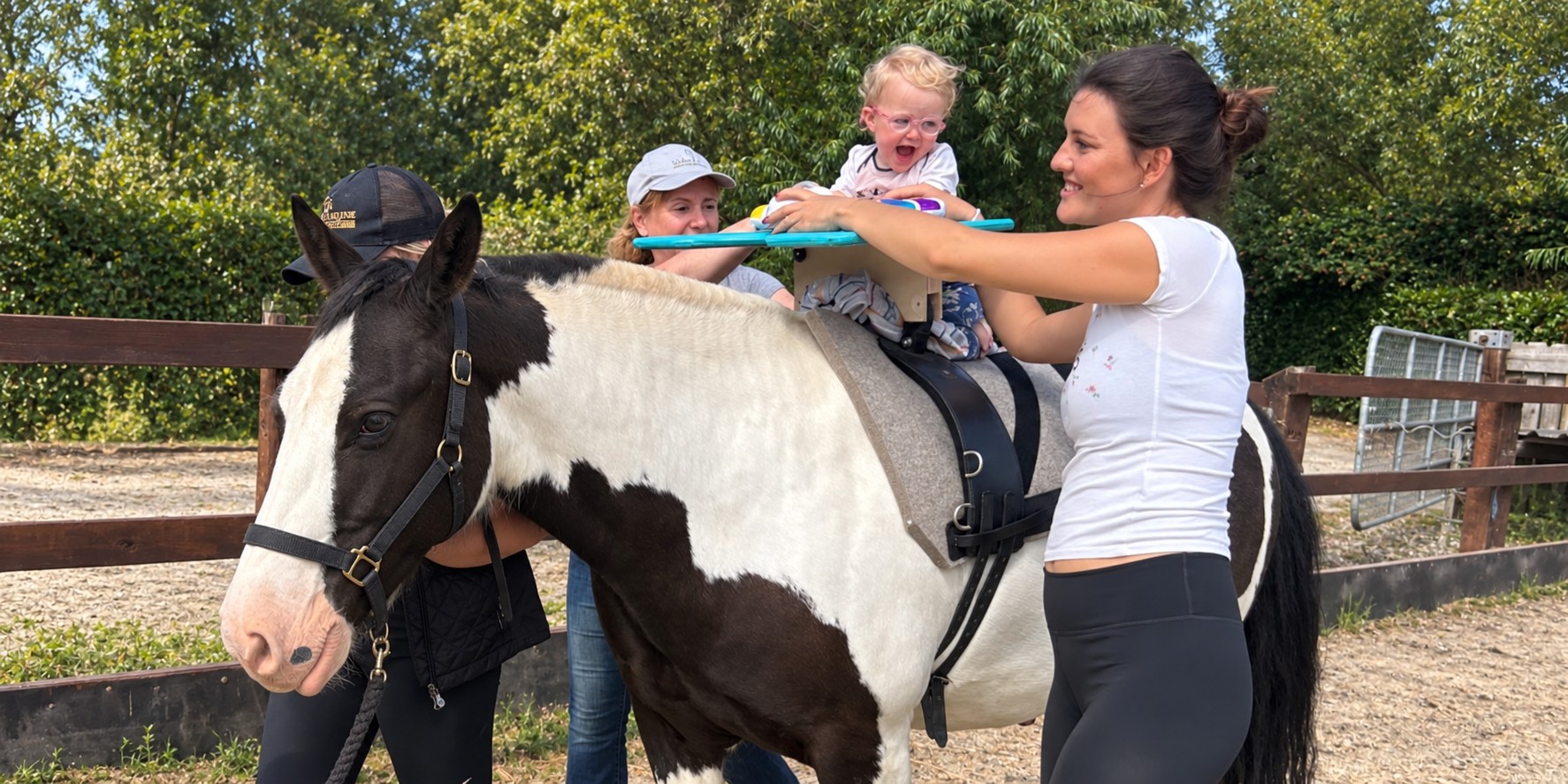
Kind, clear and ready to move
In these familiar situations, I sometimes have a quiet agreement with the parents beforehand: we keep the arrival brief and calm. We say hello, the equine is ready, and we move smoothly into the planned therapeutic position and start walking. There is little conversation or direct eye contact during that transition. My approach is kind but firm, with a clear sense of what happens next.
For me, empathy does not always need a long conversation.
And very often, this is where the mood changes. Once the equine starts walking, the movement does much of the work for us. The child who arrived with a determined “not today” becomes interested, happy and willing to participate. After all that potential discussion at the mounting area, we are suddenly getting on with the session.
I’m describing this approach with children whose responses I already know. Recognising a familiar hesitation still requires attention to what is happening today. Pain, fear or active resistance calls for reassessment; confidence does not remove the need to notice those differences.
When I teach, I notice how much children respond to the therapist’s confidence and decision-making. The way we approach, speak, offer support and begin can influence the whole interaction. A hesitant start can invite more hesitation, while a calm, clear transition can make the next step easier to follow.
Children notice our uncertainty too
For me, empathy doesn’t always require a long conversation. It can also mean noticing that a child is finding the transition difficult and making that transition less complicated. I remain responsible for the therapeutic decision, while paying attention to the child’s response. Being clear about the plan and being responsive belong together.
This is one subtlety I want future practitioners to understand. Professional confidence develops through knowledge, supervised practice and learning to recognise different situations—not through memorising a sentence that works with every child. Sometimes fewer words help. Knowing when they help is part of the work.
Want to build a stronger foundation before working in Equine Assisted Services?
Core Principles of Equine Assisted Services is a 74-hour online foundation programme designed to help you understand professional roles, safety, equine welfare, terminology and the knowledge you need for your next step.
Věra’s EAS Lens is a space where I share my professional reflections, clinical reasoning, and international experience in Equine Assisted Therapy and Services. Drawing on many years of practice, education, and collaboration across countries and disciplines, I look at EAS through an expert, critical, and ethical lens. This blog is written for professionals, students, and organisations who wish to understand EAS beyond trends and enthusiasm, and to anchor their work in quality, responsibility, and meaningful practice.
Follow my blog on FB, Ins and LinkedIn #VeraEASLens

Enjoyed this article? Download our free e‑book “10 Essential Insights into Equine Assisted Services” and discover practical tips you can start using today.
Would you like more inspiration, ideas, and professional insights? Join our Svítání newsletter and never miss an article, event, or course update.
Curious to deepen your knowledge in Equine Assisted Services? Explore our courses designed by experienced practitioners and start your learning journey with Svítání today.
 The Silent Load: Why Therapy Equines Shouldn’t Be Called Therapists
In modern discourse, it’s all too easy to conflate our Equine Assisted…
 Enthusiastic but not yet qualified
Can enthusiasm replace training in Equine Assisted Therapy? A professional reflection on…
 What I Wish I Had Known Before Working in Equine Assisted Services
What should you know before working in Equine Assisted Services? Vera Lantelme-Faisan…