What Can You Actually Do When Equine Assisted Services Barely Exist in Your Country?
What do you do when you are interested in Equine Assisted Services, but there is almost nothing around you? No recognised centres, no obvious training pathway, no national network and sometimes not even a commonly accepted name for the work.
I have worked in countries where Equine Assisted Services were well established and in places where the field was only beginning to take shape. The difference is enormous. In the second situation, you are not only learning how to practise; you are also learning how to explain the field, how to connect it with existing systems and how to find people who may become your first collaborators.
For someone starting there, I would not begin by asking how to recreate a centre from another country. I would begin by looking carefully at what already exists locally.
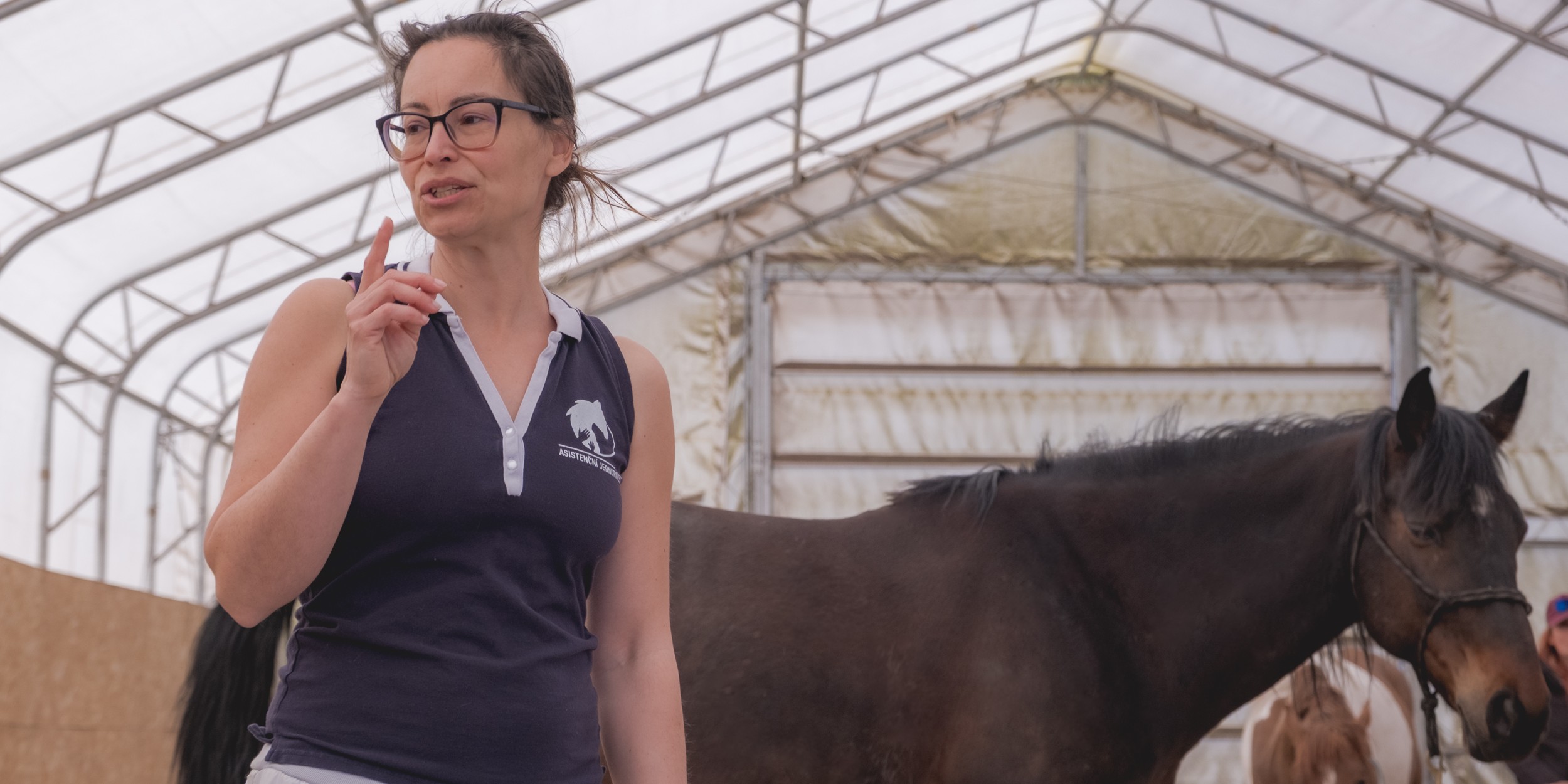
Start with the systems that are already there
Even when Equine Assisted Services barely exist, healthcare, education, disability support, mental health services, equestrian organisations and community programmes usually do.
That gives you somewhere to start. A physiotherapist can speak with rehabilitation services and other therapists. An educator can approach schools or organisations working with children and adults with additional needs. Someone developing Equine Assisted Learning may find opportunities through education, youth work or community programmes.
The people you contact may never have heard the term Equine Assisted Services. That is not necessarily a problem. I have found it much more useful to explain what the programme is intended to achieve, who it is for and what the practitioner’s role is than to begin with terminology that means nothing to the person listening.
If they understand the purpose, structure, and responsibility behind the service, the conversation becomes much easier.
When the field barely exists locally, the first step is usually not to build a new system, but to find where your work can connect with the systems already there.
One good partnership can change the beginning completely
You may not need a national organisation behind you to start developing something locally. Sometimes one good partnership is enough to make the first stage possible.
That might be an equestrian centre interested in developing a new programme, a rehabilitation service looking for additional options for clients, a school, a charity or a disability organisation. The exact partner will depend on the type of Equine Assisted Services you want to provide.
I would spend time finding people who understand collaboration rather than trying to convince everybody at once. A centre with suitable equines and good welfare standards, combined with someone who understands the client group, can provide a much stronger beginning than trying to establish everything independently.
That partnership also gives you a local reference point. Once people can see the programme functioning, referrals and conversations become more concrete. It is much easier to explain a service that already exists than an idea that people have never encountered.
You may need to explain your work more than you expected
When a field is new, communication becomes part of the work.
A doctor may ask what happens during a session. A school may want to know who is responsible for the participant. An insurer may need a detailed description because they have never seen this type of service before. Families may arrive with completely different ideas about what working with equines actually involves.
This can feel slow at the beginning, but it is also useful. It forces you to describe your work clearly. What do you provide? Who is it for? What are the goals? Who is responsible for the client? Who is responsible for the equine? How is the session organised?
In my experience, vague descriptions create more difficulty than an unfamiliar field. People can understand something new when it is explained clearly.
I would also avoid copying terminology or organisational models from another country without checking whether they fit locally. A structure that works well in the UK, Finland, the Czech Republic or the United States may sit very differently within another healthcare, education or equestrian system.
Find other people before you try to build everything yourself
Working in a country where Equine Assisted Services are still developing can become isolating very quickly if you try to solve every problem alone.
Look for other practitioners, even if they are working under a different name. Speak with equine professionals, therapists, educators, mental health practitioners and riding centres. International networks can also help when local guidance is limited, particularly on terminology, welfare standards, ethics, and education.
Small local networks can grow surprisingly quickly. Two or three people begin sharing information about facilities, insurance, referrals or training. Later, that may develop into meetings, shared standards or a national organisation.
I have seen this type of development more than once. The field usually grows because people connect practice, education, and local systems, not because a complete national framework appears first.
Begin with something that can work locally
If Equine Assisted Services barely exist in your country, start with a manageable programme and a clear local purpose. Find the client group, organisation or community that can genuinely benefit from the service and build from there.
The first version does not need to be a large centre with several programmes and a national profile. A well-run collaboration with one facility and one clearly defined service can teach you far more about the local reality than months spent planning a model imported from somewhere else.
As the programme develops, you begin to see what is missing. Perhaps you need stronger referral relationships, additional education, better facilities, more equines or a local network. Those decisions become easier once they are based on experience rather than assumptions.
If you are preparing to develop Equine Assisted Services in a country where the field is still emerging, education can give you a sound foundation, but local relationships will shape how that knowledge is applied.
Want to build a stronger foundation before working in Equine Assisted Services?
Core Principles of Equine Assisted Services is a 74-hour online foundation programme designed to help you understand professional roles, safety, equine welfare, terminology and the knowledge you need for your next step.
This article is part of a series addressing the practical questions people face when considering a career in Equine Assisted Services.
The next article in the series will explore: What Does a Typical Working Day in Equine Assisted Services Look Like?
About Vera’s EAS Lens
Vera’s EAS Lens – An Expert Guide to Equine Assisted Therapy and Services is written by Vera Lantelme-Faisan, MSc, a physiotherapist, educator and international lecturer with more than 25 years of clinical and teaching experience in Equine Assisted Therapy and Services.
The blog examines professional practice, education, safety, clinical decision-making and equine welfare through the lens of real experience. It is written for practitioners, learners and anyone seeking a clearer understanding of responsible Equine Assisted Services.
Vera EAS Lens – Blog Subscription: https://shorturl.at/oWzLS
Follow my blog on FB, Ins and LinkedIn #VeraEASLens

Enjoyed this article? Download our free e‑book “10 Essential Insights into Equine Assisted Services” and discover practical tips you can start using today.
Would you like more inspiration, ideas, and professional insights? Join our Svítání newsletter and never miss an article, event, or course update.
Curious to deepen your knowledge in Equine Assisted Services? Explore our courses designed by experienced practitioners and start your learning journey with Svítání today.
 Enthusiastic but not yet qualified
Can enthusiasm replace training in Equine Assisted Therapy? A professional reflection on…
 What I Wish I Had Known Before Working in Equine Assisted Services
What should you know before working in Equine Assisted Services? Vera Lantelme-Faisan…
 What Does a Typical Working Day in Equine Assisted Services Look Like?
What does a typical day in Equine Assisted Services look like? Explore…