Do I Need Horse Experience to Work in Equine Assisted Services?
If you already have a profession in healthcare, mental health, education or social care, how much horse experience do you need before entering Equine Assisted Services? You do not need to arrive as an advanced rider or lifelong horse owner. You do need sufficient real-world experience with equines to understand their behaviour, movement, welfare, and responses in the work you intend to provide.
The level of competence will vary depending on your role. A physiotherapist, psychotherapist, Equine Assisted Learning practitioner, assistant and equine specialist do not carry the same responsibilities. What they share is that they are working in an environment where the equine is an active participant, which requires more than just feeling comfortable around horses.
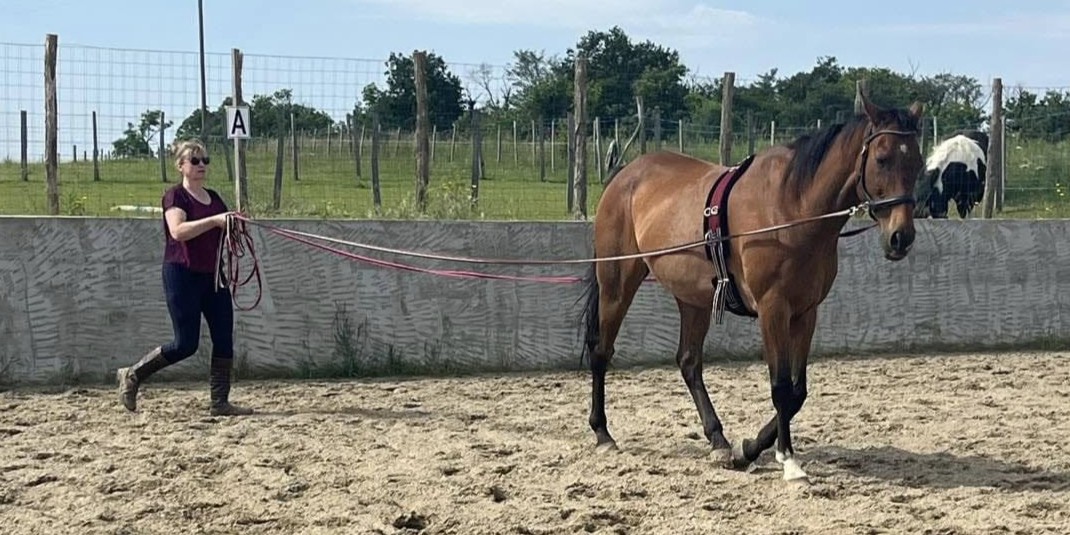
Riding experience helps, but it tells only part of the story
Riding can give you valuable knowledge. You experience rhythm, balance, movement and communication directly through your own body. For therapists working with movement, particularly in Equine Assisted Physiotherapy, this experience can contribute considerably to understanding what the client receives during mounted work.
At the same time, I have met experienced riders who needed to develop a very different type of observation for Equine Assisted Services. Riding skills do not automatically mean that someone recognises subtle discomfort, changes in behaviour, fatigue or a decrease in willingness to participate. A person may be confident in the saddle while having relatively little experience of observing an equine during close interaction with a vulnerable client.
For me, the number of years around horses is less important than the quality and relevance of that experience.
The reverse can also be true. Someone who did not grow up riding may become very competent around equines through good teaching, regular practice and careful observation. For me, the number of years around horses is therefore less interesting than the quality and relevance of that experience.
Different roles require different equine knowledge.
A practitioner in Equine Assisted Learning may need to read the equine’s responses during an activity and understand when the interaction is changing. A psychotherapist working within Equine Assisted Mental Health needs enough equine knowledge to distinguish what may be happening for the client from what is happening for the equine. An assistant needs practical confidence, good observation and safe handling skills.
For therapists, movement can add another layer. We may need to understand rhythm, symmetry, stride, balance, and how different equines physically influence the client. We also need to notice when movement changes during a session, because that change may affect both the therapeutic plan and the equine’s comfort.
The equine specialist or handler naturally needs deeper practical competence in areas such as training, preparation, behaviour and workload. Even then, the work is strongest when the whole team understands each other’s responsibilities well enough to communicate effectively.
I find this particularly important in multidisciplinary teams. The therapist or educator does not need to become the veterinarian, farrier or trainer. The equine professional does not need to become the therapist. But neither side can work in complete isolation from the other.
The most useful skill is learning to observe
Much of equine competence develops by learning to see more.
At the beginning, people tend to notice obvious behaviours. Later, they start seeing smaller changes: tension in the body, altered rhythm, changes in attention, repeated avoidance, unusual stillness or a response that is different from the equine’s normal pattern. These observations become meaningful only when you know the individual equine and understand the context.
This takes regular contact. A few practical days during a course can introduce skills, but they cannot provide every experience you will need. Spending time around well-managed equines, observing them at rest, during preparation, in training and during sessions gradually builds a much richer understanding.
Experience with different equines also matters. If you know only one very familiar horse, it is easy to take their behaviour, movement and reactions as your reference point. Working with equines of different ages, temperaments, body types and training histories teaches you how individual they really are.
I also value recorded practical work in education. When students watch themselves afterwards, they often notice their timing, position or the equine’s response much more clearly than they did in the moment. With feedback, that becomes a very useful way to develop practical awareness.
Horse experience should grow with your role.
I would not tell someone with limited experience with horses that they cannot enter Equine Assisted Services. I would want to know how they plan to develop that part of their competence.
Regular supervised practice, placements, work in an established centre and learning from experienced equine professionals can all provide a strong foundation. The important part is that the learning is intentional. Spending years around horses does not automatically produce good practice if nobody questions routines or reflects on what the equine is communicating.
Equine knowledge also continues developing after qualification. The more you work, the more differences you see between individuals, environments and situations. I still find that equines make me reconsider decisions and notice things I did not expect. That is one of the reasons this work remains so demanding and so interesting.
So, do you need horse experience to work in Equine Assisted Services? You need equine experience appropriate to the responsibility you will carry. It does not have to begin with advanced riding, but it does need to become a serious part of your preparation.
Good education should make those expectations clear and give students opportunities to connect equine knowledge with their own professional role. My educational programmes include practical equine work, observation and feedback because competence develops through what students understand, what they notice and what they can apply in real situations.
Want to build a stronger foundation before working in Equine Assisted Services?
Core Principles of Equine Assisted Services is a 74-hour online foundation programme designed to help you understand professional roles, safety, equine welfare, terminology and the knowledge you need for your next step.
This article is part of a series addressing the practical questions people face when considering a career in Equine Assisted Services.
The next article in the series will explore: Do I Need My Own Centre to Work in Equine Assisted Services?
About Vera’s EAS Lens
Vera’s EAS Lens – An Expert Guide to Equine Assisted Therapy and Services is written by Vera Lantelme-Faisan, MSc, a physiotherapist, educator and international lecturer with more than 25 years of clinical and teaching experience in Equine Assisted Therapy and Services.
The blog examines professional practice, education, safety, clinical decision-making and equine welfare through the lens of real experience. It is written for practitioners, learners and anyone seeking a clearer understanding of responsible Equine Assisted Services.
Vera EAS Lens – Blog Subscription: https://shorturl.at/oWzLS
Follow my blog on FB, Ins and LinkedIn #VeraEASLens

Enjoyed this article? Download our free e‑book “10 Essential Insights into Equine Assisted Services” and discover practical tips you can start using today.
Would you like more inspiration, ideas, and professional insights? Join our Svítání newsletter and never miss an article, event, or course update.
Curious to deepen your knowledge in Equine Assisted Services? Explore our courses designed by experienced practitioners and start your learning journey with Svítání today.
 The Silent Load: Why Therapy Equines Shouldn’t Be Called Therapists
In modern discourse, it’s all too easy to conflate our Equine Assisted…
 Enthusiastic but not yet qualified
Can enthusiasm replace training in Equine Assisted Therapy? A professional reflection on…
 What I Wish I Had Known Before Working in Equine Assisted Services
What should you know before working in Equine Assisted Services? Vera Lantelme-Faisan…