What Qualifications Do I Really Need to Work in Equine Assisted Services?
If something is called therapy, somebody has to carry professional responsibility for the therapy.
That responsibility comes from the practitioner’s professional qualification and scope of practice. In my case, I am a physiotherapist. When I provide Equine Assisted Physiotherapy, I remain responsible for assessment, therapeutic goals, clinical decisions, documentation and the treatment I provide. The presence of an equine does not create the therapy or replace the professional qualification behind it.
This distinction comes before certificates, course titles or accreditation.
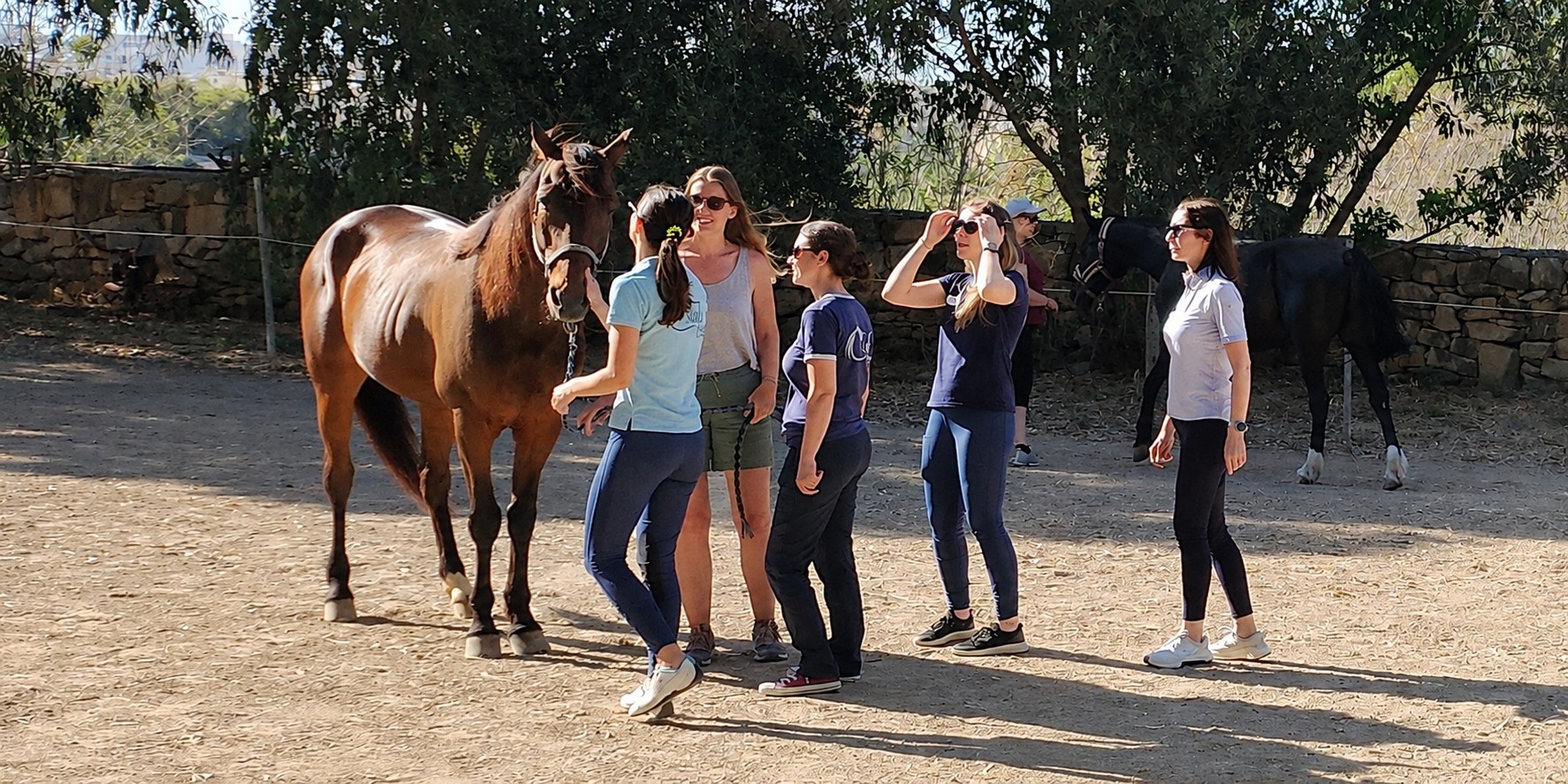
Be clear about the service you provide
A person can have a very positive experience with an equine. They may become more confident, communicate differently, participate more actively, learn something new or simply feel better.
These outcomes may be meaningful without the service being therapy. They do not need to be therapy to have value.
Equine Assisted Services is a broad field involving many professions and approaches. It may include Equine Assisted Physiotherapy, Equine Assisted Occupational Therapy, Equine Assisted Speech and Language Pathology, Equine Assisted Psychotherapy and other Equine Assisted Mental Health services, Equine Assisted Learning, Equine Assisted Coaching, therapeutic riding, adaptive riding and para-equestrian sport.
These areas differ in purpose, professional responsibility and the qualifications required from the practitioner. Some are healthcare or mental health interventions. Others are educational, developmental, riding or sport-based services. One qualification cannot prepare somebody for all of these roles.
Be clear about what you are qualified to provide, and call the service what it actually is.
A course carrying words such as therapy, practitioner or facilitator in its title does not by itself create a healthcare, mental health or other regulated professional qualification.
Your original profession provides the foundation
In Equine Assisted Therapy, the practitioner brings an existing therapeutic profession into an equine environment.
A physiotherapist already has a foundation in assessment, movement analysis, treatment planning, clinical reasoning and professional responsibility. An occupational therapist, speech and language therapist, psychologist, psychotherapist or another appropriately qualified professional brings the knowledge, competence and professional boundaries of their own discipline.
The same clarity is needed outside therapy. Equine Assisted Learning and Coaching require preparation relevant to the service and population involved. Therapeutic riding, adaptive riding and para-equestrian sport require appropriate equestrian, instructional and participant-related competence. Equine professionals and assistants may also hold substantial responsibility for the equine, environment and safety while having a different role from the therapist, educator or coach.
This is why the question What qualification do I need for Equine Assisted Services? only becomes useful once the professional role is clear.
Specialist Equine Assisted Services education comes next
An existing professional qualification does not automatically prepare someone to work within Equine Assisted Services.
My physiotherapy education gave me a strong clinical foundation, but it did not teach me how to analyse movement provided by an equine, select an appropriate equine for a therapeutic goal, work with different therapy positions or understand how the client, practitioner, equine and environment influence one another.
Specialist education adds this layer. Depending on the discipline, it may include equine behaviour and welfare, horsemanship, movement, handling, positioning, risk management, teamwork and practical decision-making.
The content needs to fit the professional role. A physiotherapist requires different specialist preparation from an Equine Assisted Learning practitioner, therapeutic riding instructor or mental health professional.
Equine competence belongs within that preparation. Even when another team member is responsible for handling the equine, the practitioner needs enough knowledge to recognise changes in equine movement, behaviour, comfort, workload and willingness to participate. Decisions within a session affect both the client and the equine.
What does the certificate actually represent?
The word certificate can describe very different forms of education.
It may confirm attendance at a workshop or completion of an online programme. It may also represent a substantial assessed qualification involving written work, practical evidence, case studies, supervised experience or examinations.
Attendance certificates have a legitimate place in continuing professional development. The distinction becomes important when attendance is presented as evidence of competence that was never assessed.
With an assessed qualification, the relevant question is what the learner actually had to demonstrate. Were there defined learning outcomes? Was practical competence assessed? Was feedback provided? Was supervised work required?
Accreditation also needs context. Who awards or accredits the qualification? At what level? What was assessed? How is it recognised where you intend to practise?
I will look more closely at evaluating Equine Assisted Services courses later in this series. For this article, the essential point is that the title printed on a certificate tells only part of the story.
Your country matters too
There is no single international list of qualifications that applies everywhere.
Professional titles, healthcare and mental health regulation, insurance requirements and recognition of qualifications differ between countries. A qualification obtained internationally may have a different status where you eventually practise.
Before beginning professional work, check the requirements connected with your actual role: relevant legislation, professional body requirements and insurance conditions.
Legal permission and professional readiness are also different matters. Competence develops through education, assessment, supervised experience and continued practice.
What qualifications do you really need?
Start with the professional qualification appropriate to the service you intend to provide. If you are providing therapy, you need the recognised professional foundation that allows you to provide that particular therapy.
Then add specialist Equine Assisted Services education relevant to your role, together with practical equine competence and supervised experience.
The number of certificates matters far less than what you can actually do, what has been assessed and what professional responsibility you are prepared to carry. Clear qualifications also make it easier for clients, families, colleagues and referring professionals to understand exactly what service you provide.
If you are considering professional education in Equine Assisted Services, look for a pathway that builds on an appropriate professional foundation and develops the specialist competence required for your intended role. Our educational programmes follow this principle, connecting professional knowledge with equine competence and practical application.
Want to build a stronger foundation before working in Equine Assisted Services?
Core Principles of Equine Assisted Services is a 74-hour online foundation programme designed to help you understand professional roles, safety, equine welfare, terminology and the knowledge you need for your next step.
This article is part of a series addressing the practical questions people face when considering a career in Equine Assisted Services.
The next article in the series will explore: Can I Earn a Living in Equine Assisted Services?
About Vera’s EAS Lens
Vera’s EAS Lens – An Expert Guide to Equine Assisted Therapy and Services is written by Vera Lantelme-Faisan, MSc, a physiotherapist, educator and international lecturer with more than 25 years of clinical and teaching experience in Equine Assisted Therapy and Services.
The blog examines professional practice, education, safety, clinical decision-making and equine welfare through the lens of real experience. It is written for practitioners, students and anyone seeking a clearer understanding of responsible Equine Assisted Services.
Vera EAS Lens – Blog Subscription: https://shorturl.at/oWzLS
Follow my blog on FB, Ins and LinkedIn #VeraEASLens

Enjoyed this article? Download our free e‑book “10 Essential Insights into Equine Assisted Services” and discover practical tips you can start using today.
Would you like more inspiration, ideas, and professional insights? Join our Svítání newsletter and never miss an article, event, or course update.
Curious to deepen your knowledge in Equine Assisted Services? Explore our courses designed by experienced practitioners and start your learning journey with Svítání today.
 Enthusiastic but not yet qualified
Can enthusiasm replace training in Equine Assisted Therapy? A professional reflection on…
 What I Wish I Had Known Before Working in Equine Assisted Services
What should you know before working in Equine Assisted Services? Vera Lantelme-Faisan…
 What Does a Typical Working Day in Equine Assisted Services Look Like?
What does a typical day in Equine Assisted Services look like? Explore…